




An unfinished basement featuring exposed ceiling joists, a metal HVAC unit with round ductwork, a hanging light bulb, and scattered boxes and debris along the left wall.

Furnace Installation in Cape Girardeau, MO

Tell us about the job

Takes about a minute. No obligation.

New system or replacementFurnace or heatingCape Girardeau County, MO
Step 1 of 2

What ZIP code is the job in?

Cape Girardeau County saw 160 severe weather events between 2015 and 2024, and 120 of those were damaging wind. Hail showed up 23 times, and the county had 7 tornadoes in that same stretch. None of that is rare weather for here, it's the normal run of a decade. Statewide, close to one in five households lost power for a full day or more in 2024. A furnace needs power to run even if the fuel is gas, and if your home heats with electricity, a dead grid means a dead furnace. Where the install goes and how it's protected has to account for wind and hail, not just the cold.

7 months
October through April, your furnace is on duty
27°F
the average winter night it heats against
80% AFUE
the federal minimum any new unit must meet
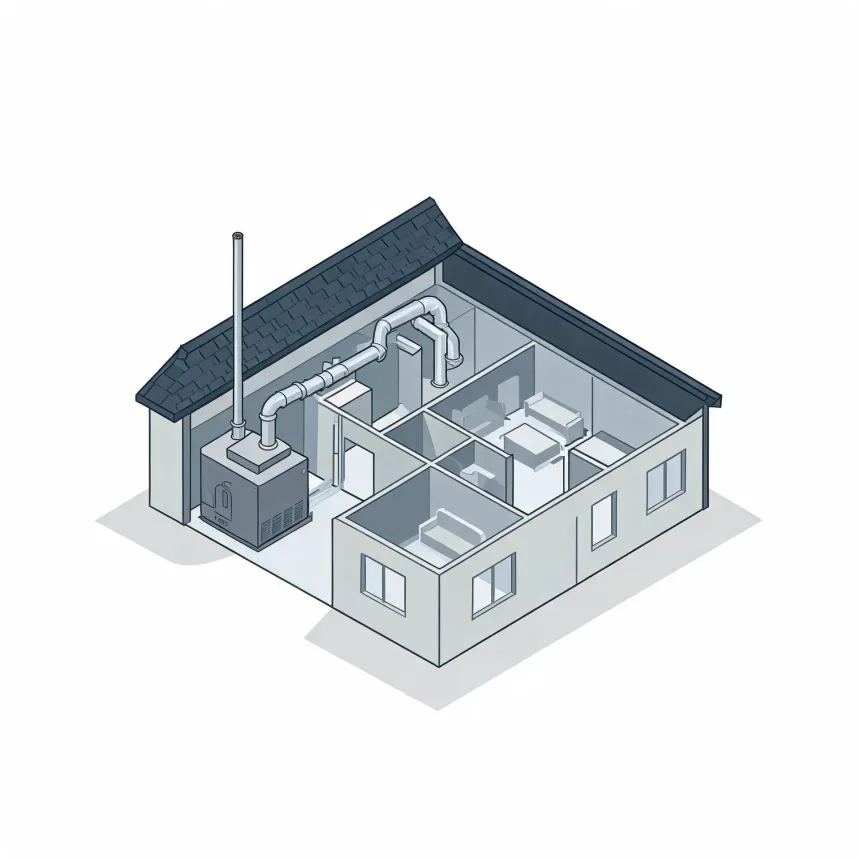
Isometric grayscale illustration of a cutaway single-story house showing interior rooms with furniture, plus an exterior furnace unit with a tall flue pipe and ducting running into the attic space.
Your furnace works hardest from November through March.

NOAA nClimDiv, 1991–2020 normals

Electricity heats 47.9% of homes in Cape Girardeau County, more than gas or anything else.

If your home already heats with electricity, replacing your furnace with another electric system is the straightforward path.

Seven months of heat means no good month to be without it

Heat runs October through April
Winter nights average 27°F
Climate zone 4A

Cape Girardeau County falls under zone 4A, which asks real work of a furnace in both directions, summer and winter. Any furnace installed here has to meet the federal minimum for that manufacture date: at least 80 percent of the gas it burns turned into heat. That floor rises to 95 percent for units built on or after December 18, 2028, so what counts as compliant is about to change. A furnace bought today still only has to clear 80 percent, but one bought after that date won't be allowed to. A federal tax credit is available for qualifying high-efficiency equipment, separate from whatever the state minimum requires.

Plan the install around the power going out, because here it will

This is where planning the install earns its keep. Talk through where the new system goes, what shields the outdoor parts from wind and hail, and what happens to your heat the next time the power drops. Settle that alongside the furnace itself, not after.

Find a contractor
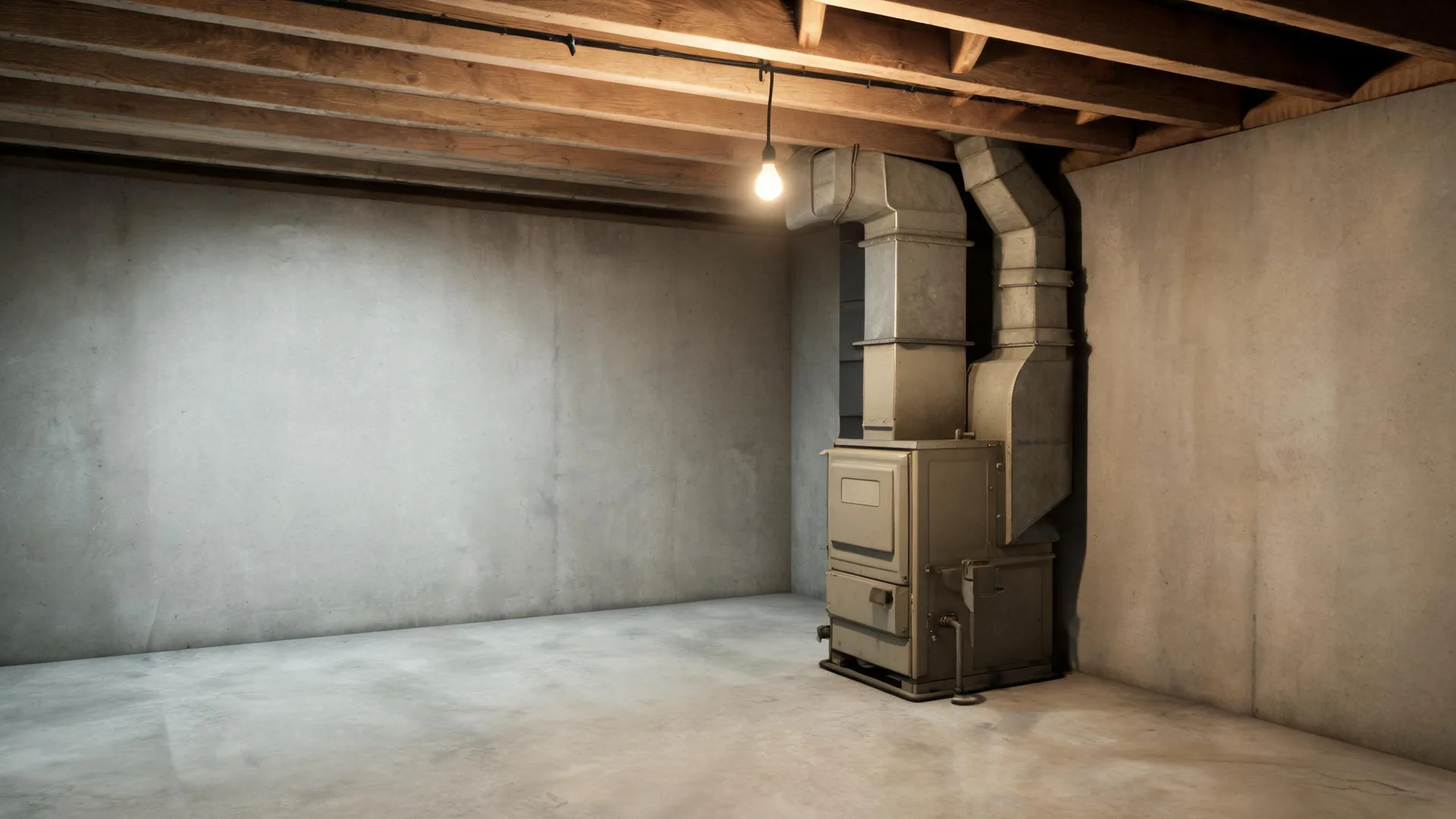
A gray gas furnace with attached ductwork and piping installed in an unfinished concrete basement.

The right size isn't a guess, it's a calculation

Sizing a furnace is not about buying the biggest one you can afford. A unit that's too big for the house will short cycle, firing on, heating the air fast, and shutting off before it ever pulls moisture or settles the temperature room to room. That on-off-on pattern wears the ignition system and the blower motor harder than steady running would. A unit that's too small just can't keep up on the coldest stretch of the year, so it runs constantly and still loses ground. The right size comes from a load calculation, not a guess based on square footage. That calculation accounts for the walls, the windows, the insulation, the ceiling height, how the house is oriented, and how much air leaks in and out of it. Two houses the same size can need different furnaces because one holds heat better than the other. Done right, the sizing gets worked out before the equipment gets picked, not after.

The percentage is the fuel bill, not the heat output

An efficiency rating tells you how much of the fuel burned turns into heat instead of going out the flue. It has nothing to do with how big a house the furnace can heat or how fast it warms a room. A high rating with the wrong size unit still leaves cold rooms. A correctly sized furnace at a lower rating still heats the house, it just turns more fuel into exhaust along the way.
The rating only holds if the install matches it

A high-efficiency furnace earns that number through its design, often a second heat exchanger that pulls more warmth out of the exhaust before it leaves the house. That second exchanger produces condensation, so it needs a drain line that actually drains and venting sized and run the way the manufacturer specifies. Put that same furnace in with the wrong venting and it won't perform at the rating on its label, no matter what the paperwork says.

A furnace quote covers more than the box with the burners in it. Ductwork is often the real variable. If the existing ducts are the wrong size for the new furnace's airflow, or leak at the joints, they need work before the furnace can heat the house the way it's rated to. Venting is another piece, since a high-efficiency furnace vents differently than a standard one and the pipe run has to match what the manufacturer specifies, not just reuse what's already there. The transition between furnace and ductwork, the gas line if it needs resizing, the electrical hookup, the condensate drain on a high-efficiency model, all of that is labor and material beyond the furnace itself. Two houses can take the same furnace and still take different amounts of work to get it running right.

Install day starts before anyone touches the old furnace, with a walkthrough to confirm the size and venting plan still hold once the installer can see the ductwork and gas line in person. The old unit comes out first, along with any venting or drain line that won't carry over. Setting the new furnace means leveling it, securing the gas and electrical connections, and tying it into the existing ductwork through a transition piece sized for that furnace's airflow. A high-efficiency model also gets a condensate drain line and intake and exhaust venting run to the manufacturer's spec, not just routed wherever the old pipe happened to go. Once it's connected, the installer fires it up, checks the gas pressure, confirms the flame looks right, and runs the blower to feel for even airflow at the vents. The job isn't done until someone has tested it through a full cycle, not just switched it on and walked away.