A row of illuminated two-story brick houses with front porches and mature trees photographed at twilight.

Furnace Installation in Branson, MO

Tell us about the job

Takes about a minute. No obligation.

New system or replacementFurnace or heatingTaney County, MO
Step 1 of 2

What ZIP code is the job in?

Weather here is rough on equipment

Taney County logged 253 severe weather events between 2015 and 2024. That includes 136 damaging wind events, 94 hail events, 11 tornadoes and 10 winter storms with heavy snow or ice. A furnace installation here has to account for what the county actually sees, not just the cold.

Power doesn't always hold through it

Nearly one in five Missouri households went at least 24 hours without power in 2024. A furnace with electric ignition or an electric blower won't run through an outage like that, and with most homes here heating electrically, a long cut means no heat at all until the power comes back.

7 months
October through April, your furnace is on duty
27°F
the average winter night it heats against
80% AFUE
the federal minimum any new unit must meet
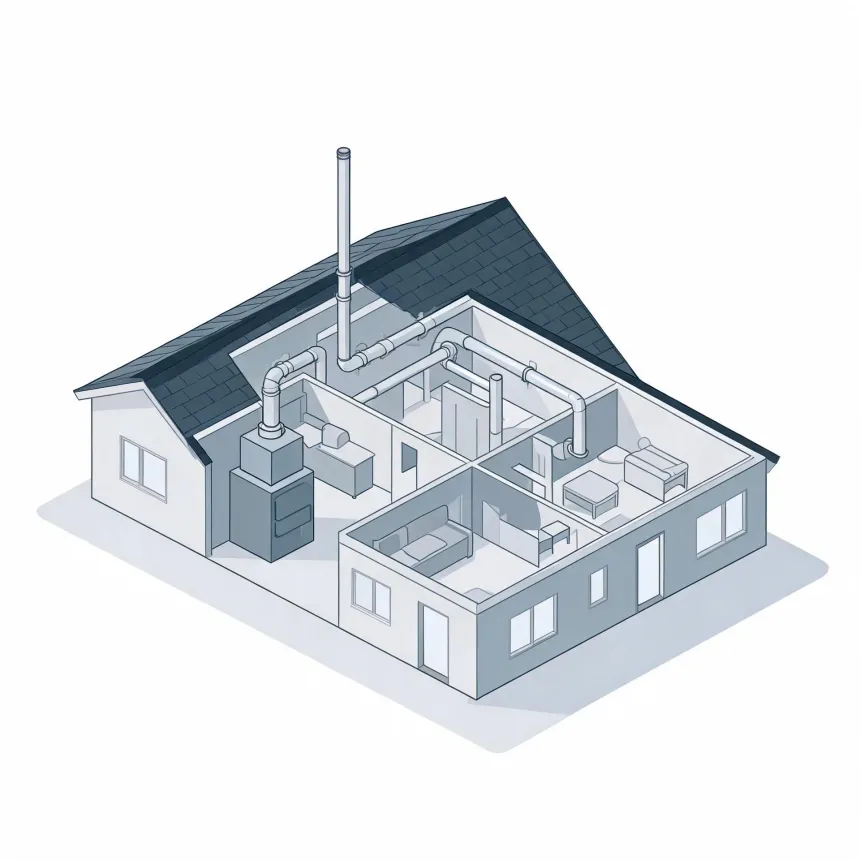
Isometric cutaway illustration of a single-story house showing interior rooms with furniture, a furnace unit connected to ductwork and a tall flue pipe extending through the roof.
Your furnace works hardest from November through March.

NOAA nClimDiv, 1991–2020 normals

Two furnaces can carry the same rating and still heat a house differently once the blower, the ductwork and the controls are matched to it.

Ask each contractor to walk through ignition type, blower type and what happens to that furnace in a power cut before comparing anything else.

Seven cold months is a long time to find out your furnace can't handle a bad night

Heat runs October through April
Winter nights average 27°F
Climate zone 4A
Most furnaces here run on electricity82% of homes here heat with electricity, more than any other fuel

Taney County falls under zone 4A, which the 2021 energy code treats as a mixed climate, real heating load and real cooling load both. Any furnace installed here has to meet the federal efficiency floor for that. Furnaces built since November 2015 have to turn at least 80 percent of their gas into heat over the season. That floor rises to 95 percent for furnaces built from December 2028 onward, so a furnace bought now and one bought a few years from now won't be held to the same standard. A federal tax credit is available for furnaces that clear a higher bar than the minimum. None of this tells you how the furnace handles a power cut, which matters just as much here.

Plan for the outage before the furnace goes in

Ask where the outdoor unit will sit and what will shield it from wind and hail. Ask what that furnace does the next time the power goes out for a day. With most homes here heating electrically, that question matters more than the rating on the box.

Find a contractor
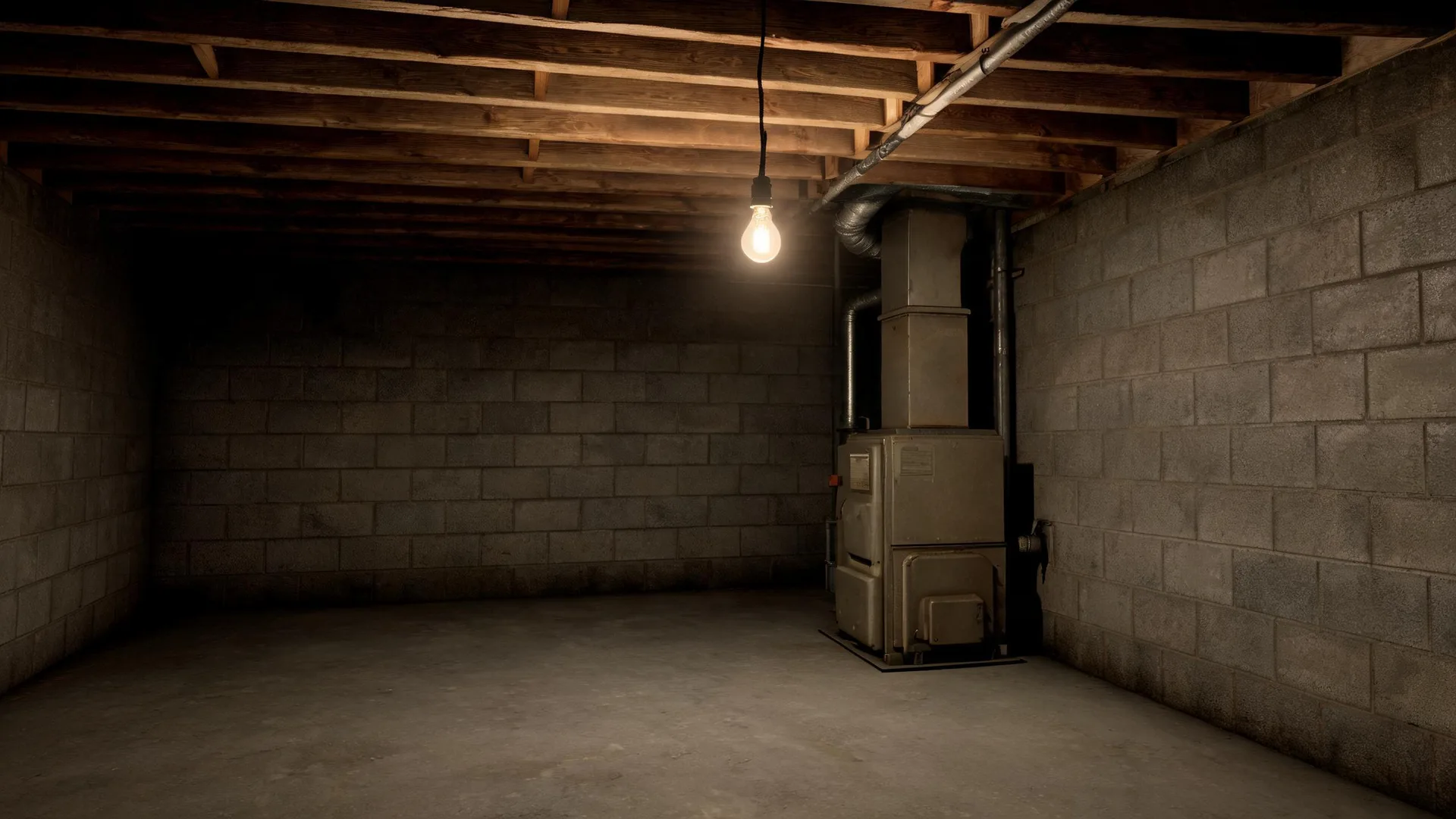
A gas furnace with attached ductwork, gas piping, and condensate lines installed in a concrete-block basement.

The rating on the box measures one thing, and it isn't the only thing that matters

The efficiency rating tells you how much of the fuel a furnace burns turns into heat in the house, and how much goes out the flue. That's all it tells you. It says nothing about the blower, nothing about the ignition, nothing about what happens when the power drops out. Two furnaces can carry the same rating and still be built nothing alike. One might hold a standing pilot that stays lit without power. The other needs an electronic igniter that has to fire every single time the furnace calls for heat. The rating is set once, at the factory, and it stays printed on that label for as long as the furnace runs. The blower motor wears. The heat exchanger ages. Filters load up and airflow drops off. None of that moves the number on the label. It's a fair way to compare furnaces side by side before you buy. It won't tell you how the one you choose is going to hold up on its own.

The right size comes from a load calculation, not the old furnace's rating

A furnace has to match the house, not the equipment it's replacing. A contractor works out the load room by room, counting windows, insulation levels, ceiling height and how the ductwork moves air through the place. Matching the new furnace to whatever was there before skips that math entirely, and it carries forward any sizing mistake the first install made.

Oversized or undersized both cause real problems, just different ones

A furnace that's too big heats the house fast, shuts off, then starts again a few minutes later. That short cycling keeps the heat exchanger from ever reaching a steady temperature and wears out the parts that start and stop with it. A furnace that's too small runs long stretches without catching up, so the house never quite gets warm on the coldest nights and the blower runs far more than it should.

Pulling the old furnace out is usually the easy part. A tech shuts off the gas line and the power to the unit, disconnects the venting, and disconnects the ductwork from the plenum. If it's a gas furnace, that gas line gets capped off safely before anyone leaves. The old heat exchanger and cabinet get hauled out, and most of that metal gets recycled rather than landfilled. What takes more care is what's left behind: the venting and ductwork have to be checked against what the new furnace actually needs, since a higher efficiency furnace often vents differently than the one it's replacing. A furnace that vented through a metal flue might need a new plastic vent pipe instead, because the exhaust runs cooler and would condense inside an old metal flue. None of that shows up until the old unit is already gone, which is why a contractor should walk through it before the swap, not after.

Once the old furnace is out, the new one gets set in place and leveled before anything gets connected. The gas line, the venting and the ductwork all tie back in, and each joint gets checked for a tight seal, because a loose duct joint or a bad vent seal causes problems no one will trace back to it for months. The electrical connections come next: power to the control board, the thermostat wire, and the blower motor. Once it's buttoned up, a tech fires it and watches it run through a full cycle, checking the flame, the temperature rise across the heat exchanger, and the airflow at the vents. Gas pressure gets checked and set to the manufacturer's spec, not left wherever it happens to land. A furnace that isn't commissioned this way might run, but it won't run the way it's supposed to.