



A row of dark gray single-story houses with asphalt shingle roofs behind trimmed hedges and a mown lawn, framed by overhanging tree branches under an overcast sky.

Furnace Repair in Springfield, MO

Tell us about the job

Takes about a minute. No obligation.

RepairFurnace or heatingGreene County, MO
Step 1 of 2

What ZIP code is the job in?

A tech starts by asking what the furnace is doing, or not doing, before touching anything. Short cycling, no heat, a burning smell, a flame that looks wrong. All of that narrows things down before the panel ever comes off. From there they check the thermostat call, then move to the furnace itself. Power to the control board, the igniter or pilot, gas pressure, whether the flame sensor is reading properly. A clogged filter or a blocked vent can make a furnace act like it has a bigger problem than it does, so that gets ruled out early. If the blower runs but no heat follows, that points to gas or ignition. If heat starts then cuts out, that usually means a safety switch is shutting things down on purpose. Once the actual cause is found, the tech can tell you what's failing, why, and what it takes to fix it.

7 months
October through April, your furnace is on duty
25°F
the average winter night it heats against
52%
of homes here heat with gas, so most furnaces here burn gas
14 winter storms
in ten years, the nights a failure hurts most
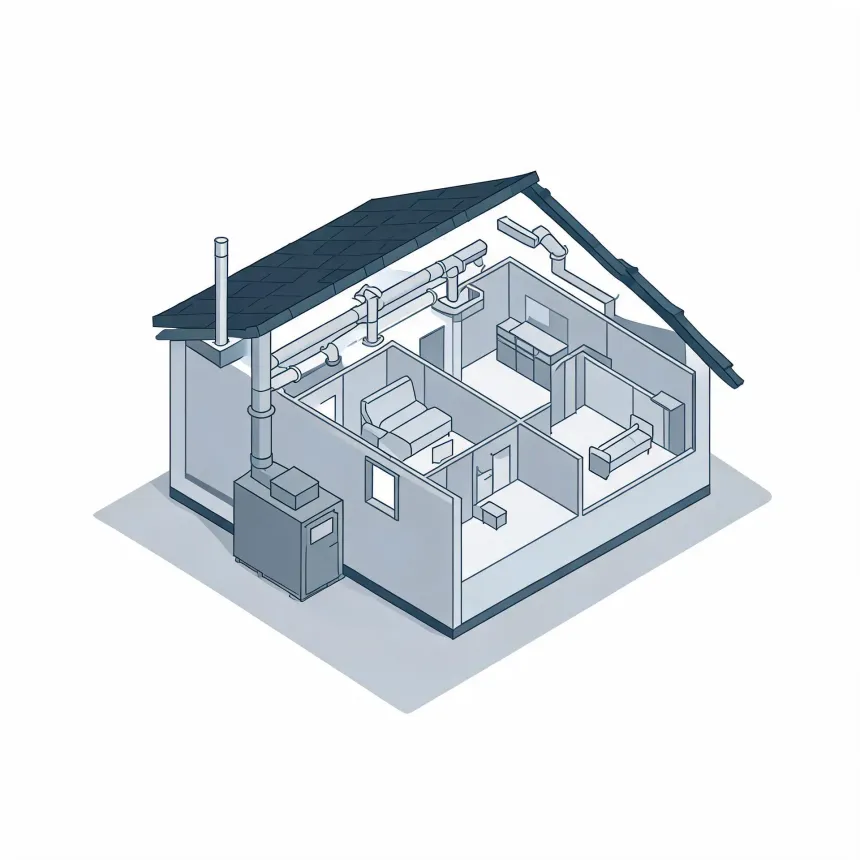
Isometric line illustration of a cutaway single-story house showing interior rooms with furniture, ceiling ductwork, a chimney flue, and a furnace unit outside the exterior wall.
Your furnace works hardest from November through March.

NOAA nClimDiv, 1991–2020 normals

The igniter is the part most furnaces lose first, worn down by simply heating up and cooling off thousands of times.

Once it cracks or stops glowing right, the furnace won't light at all, and the flame sensor often gets blamed in its place.

Half the furnaces in Greene County are newer than the part that tends to fail first

Half the homes here were built by 1982
Heat runs October through April
Winter nights average 25°F
Furnace season starts in October hereGet it checked in September, before the first cold night finds the weak part.

Greene County has logged 474 severe weather events between 2015 and 2024, and most of that was damaging wind or hail. An outdoor unit sits right where that debris lands, even though the furnace itself stays inside. A dented cabinet or a bent fin doesn't always stop the system from running, so it can take a hit and keep going for months before anything shows up. If a storm has come through since the furnace was last looked at, mention it when a tech comes out, even if nothing seems wrong yet.

A newer furnace is usually worth fixing

If your furnace came with the house, there's a good chance it's one of the newer ones in the county, and the igniter or whatever else failed is likely a worn part on a system that's otherwise got plenty of life left. That makes repair the right call.

Find a contractor
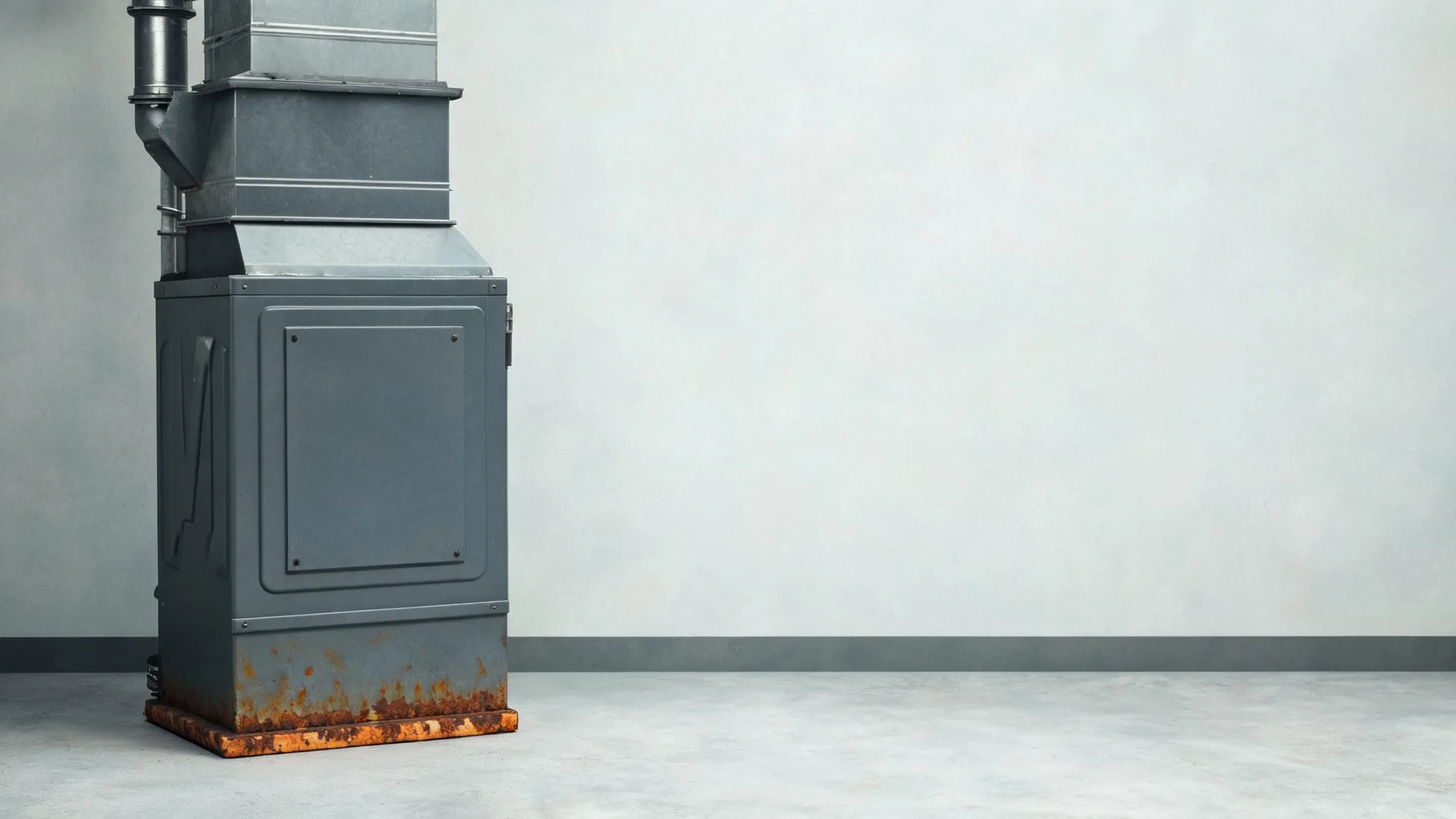
A gray gas furnace with attached ductwork and piping installed in an unfinished concrete basement.

What to check before you call anyone

Before anyone comes out, there are a few things worth checking. Start with the thermostat. Make sure it's set to heat, not just fan, and set above room temperature. Dead batteries in the thermostat will stop a call from ever reaching the furnace, so swap them if you're not sure when they were last changed. Check the filter next. Pull it out and hold it up to a light. If you can't see through it, it's choking off airflow, and that alone can cause short cycling or a furnace that blows cold. Look at the switch on the side of the furnace, the one that looks like a light switch, and make sure it hasn't been bumped off. If the furnace sits near a basement door or storage area, check that nothing's blocking the vents or the return air grille. Check the breaker too. A furnace that won't do anything at all, no sound, no blower, no light on the control board, is sometimes just waiting on a reset. None of this fixes a cracked igniter or a bad pressure switch. It just rules out the easy stuff before anyone touches a panel.

A cracked heat exchanger gets worse with every cycle

Metal that's already cracked flexes more each time it heats up and cools down. Left alone, a small crack opens wider, and that's the one part that affects whether carbon monoxide stays where it belongs.

A dirty flame sensor doesn't fix itself

Once it's coated enough to misread the flame, the furnace starts shutting off mid-cycle to protect itself. Running it anyway just means more short cycles, not a sensor that somehow clears itself.

An unfinished concrete basement containing a gas furnace with sheet-metal ductwork, utility shelving, and exposed overhead joists.

A new furnace would cut about $180 a year off heating for a typical Greene County home.

  • A new high-efficiency furnace$720 a year
  • An older furnace$900 a year

Estimates for a typical Greene County home, compared with an older unit built to the previous federal minimum, from EIA household energy data, Missouri fuel prices and NOAA climate normals. Your home will differ.

Repair makes sense when one part has failed and the heat exchanger is sound.

Replacement makes sense when the heat exchanger is cracked or the furnace keeps needing parts.

Age alone doesn't decide this. A furnace with a cracked heat exchanger is done, no matter what else is fine on it, because that's the one part tied directly to carbon monoxide staying where it belongs. An old furnace with a bad pressure switch might still be worth one more repair, especially if everything else about it runs quiet and even. What matters more is what's failing. Parts tied to safety, the heat exchanger, the gas valve, don't get patched, they get replaced, and that has to be weighed against a new unit. Parts tied to comfort or convenience, a blower motor, a capacitor, a fan limit switch, are worth fixing almost every time. If the same repair keeps coming back, that's the furnace telling you something a single fix won't answer.