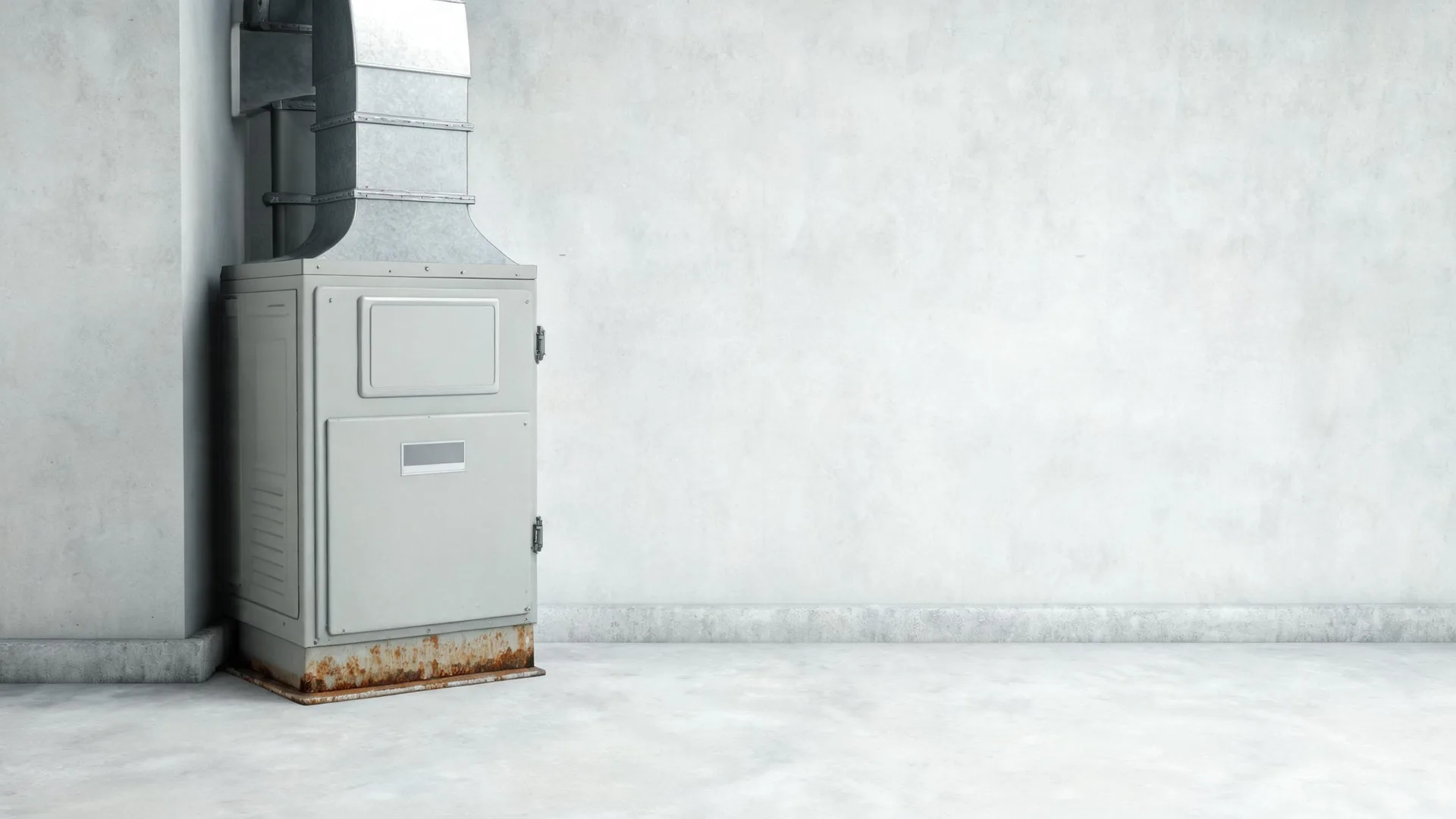
An unfinished basement featuring concrete block walls, exposed floor joists, and a metal forced-air furnace with ductwork near a central pillar.

Furnace Repair in Columbia, MO

Tell us about the job

Takes about a minute. No obligation.

RepairFurnace or heatingBoone County, MO
Step 1 of 2

What ZIP code is the job in?

A normal winter workload

Furnaces in Columbia run about seven months a year, October through April. Overnight lows average 24°F in December, January and February. That is ordinary work for a furnace. Nothing about this climate wears one down faster than usual.

So look for the usual cause first

A furnace running a normal winter season fails the same way most furnaces do. A weak igniter, a dirty flame sensor, a blower motor on its way out. Start there before assuming the problem is something rare.

7 months
October through April, your furnace is on duty
24°F
the average winter night it heats against
8 winter storms
in ten years, the nights a failure hurts most
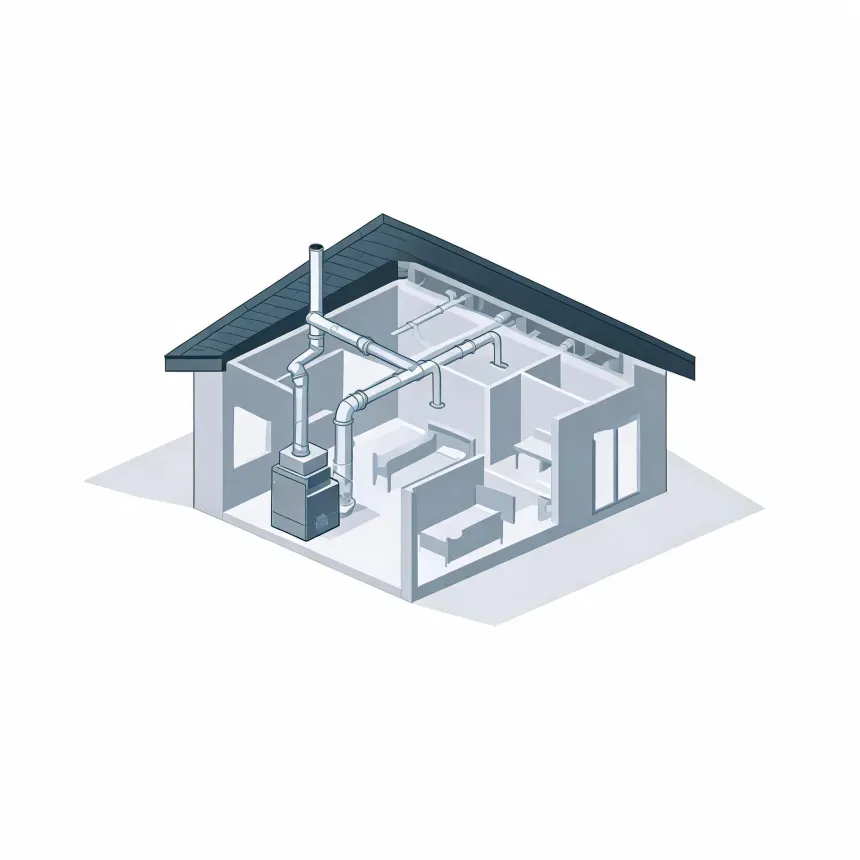
Isometric cutaway illustration of a small single-story house showing interior rooms, a furnace unit with a flue, and connected ductwork running below the dark gabled roof.
Your furnace works hardest from November through March.

NOAA nClimDiv, 1991–2020 normals

Furnaces in Boone County switch on in October.

A furnace that sat idle since spring is where the first breakdowns of the season show up.

Half the homes here were built in 1991 or later, and the furnace in one is usually worth fixing

Half the homes here were built by 1991
Heat runs October through April
Winter nights average 24°F
Running the furnace here costs what it costs anywhere in the stateNatural gas ran $16.49 per million Btu across Missouri homes in 2024

If your furnace came with the house, get a repair quote before you let anyone talk you into replacing it. A furnace installed when a newer home was built still has years in it, and most of what goes wrong, an igniter, a flame sensor, a blower motor, is a part swap, not a reason to start over. The age of the house is worth checking against the age of the furnace itself, since a system does get replaced over time and yours may not be the original. Either way, a tech can tell you in the same visit that finds the problem whether it's worth fixing, and for a newer home the answer usually is.

Get the usual fix

Nothing about this area is especially hard on it. It's most likely the usual problem with the usual fix.

Find a contractor
A man in a cap, dark long-sleeve shirt, tan work pants and boots walks up wooden porch steps toward a teal front door, carrying a canvas tool bag with hand tools.
A gray residential gas furnace installed in an unfinished basement, connected to sheet-metal ductwork and PVC pipes.

The parts that wear out, wear out the same way everywhere

Most furnace failures trace back to one of a handful of parts. The igniter is the one that goes most often. It's a thin strip that heats up to light the gas, and that heating and cooling, cycle after cycle, is what eventually cracks it. When it fails, the furnace runs the blower but never gets heat going. The flame sensor is another common point of failure, though it rarely breaks so much as it gets coated with a film that keeps it from detecting the flame, which shuts the gas off as a safety measure. Cleaning it solves most of those calls. The blower motor wears through its bearings over years of running and starts announcing itself with a grinding or squealing sound before it quits outright. Capacitors that help start the blower motor weaken slowly and give no warning until the day they don't have enough left to do the job. None of this is about one furnace being unlucky. It's what happens to the parts that cycle on and off all winter, in any furnace, anywhere.

What you'll actually notice first

A furnace that needs attention usually tells you before it quits outright. It short cycles, running for a couple minutes and shutting off before the house warms up. Or it blows air that never gets hot, which points at the igniter or the gas valve rather than the blower. A burning or musty smell on startup is normal for the first few minutes of the season but should clear fast. If it lingers, or if you hear a boom when the burners light, that's a delayed ignition and worth a call.

What tells you to stop waiting

Some signs mean shut it off and get someone out instead of running it another night. A furnace that trips its breaker or blows a fuse repeatedly has an electrical fault that will not fix itself by resetting it again. Soot around the vent hood, a yellow flickering burner flame instead of steady blue, or a carbon monoxide alarm going off are not wear and tear. Those point at incomplete combustion, and that's a safety call, not a maintenance one.

An unfinished basement interior showing a gray furnace unit beneath a bare incandescent bulb, surrounded by exposed joists, concrete walls, cardboard boxes, and utility pipes.

A new furnace would cut about $200 a year off heating for a typical Boone County home.

  • A new high-efficiency furnace$790 a year
  • An older furnace$990 a year

Estimates for a typical Boone County home, compared with an older unit built to the previous federal minimum, from EIA household energy data, Missouri fuel prices and NOAA climate normals. Your home will differ.

Repair makes sense when one part has failed and the heat exchanger is sound.

Replacement makes sense when the heat exchanger is cracked or the furnace keeps needing parts.

A tech weighing repair against replacement is really asking one question. Is the rest of the furnace still good underneath the part that failed. A cracked heat exchanger or a control board that has already failed once changes the math, because now it is not just the part in front of you. Most calls are not that. Most calls are a part that wears out on its own schedule, gets replaced, and the furnace runs another several winters without trouble. What matters more than the furnace's age is whether it has been looked after. A furnace that has had its flame sensor cleaned and its filter changed on schedule tends to fail less often and more predictably than one that has not. A tech can usually tell within the same visit which kind of problem is in front of them.