
Furnace leaking water in Columbia, MO
Get matched with a pro who works on furnaces in Boone County.
Request a proWhy is water leaking from my furnace?
A puddle under the furnace or water dripping from it is unsettling, especially in the middle of a cold snap. Most people assume the worst, a cracked heat exchanger or a dying unit, but in Columbia the more common cause is simpler and tied to the kind of furnace running in a lot of local homes. What the water actually means depends on where it's coming from.
It's likely condensation from a high-efficiency furnace, not a leak
A lot of furnaces installed in Boone County in the last couple decades are high-efficiency models that produce condensation as part of normal operation, and that water has to drain somewhere through a condensate line and drain or a condensate pump. Water shows up when that line clogs, cracks, or the pump fails, and it backs up instead of draining away. Since winters here run cold and the furnace runs for months straight, that condensate system works hard and a clog can build up gradually before it finally overflows. Less often, the water points to a cracked heat exchanger, which is a bigger problem. Either way, a furnace shouldn't be leaking water, and it's worth having a contractor look at the drain line and the furnace itself before the issue gets worse or shuts the system down.
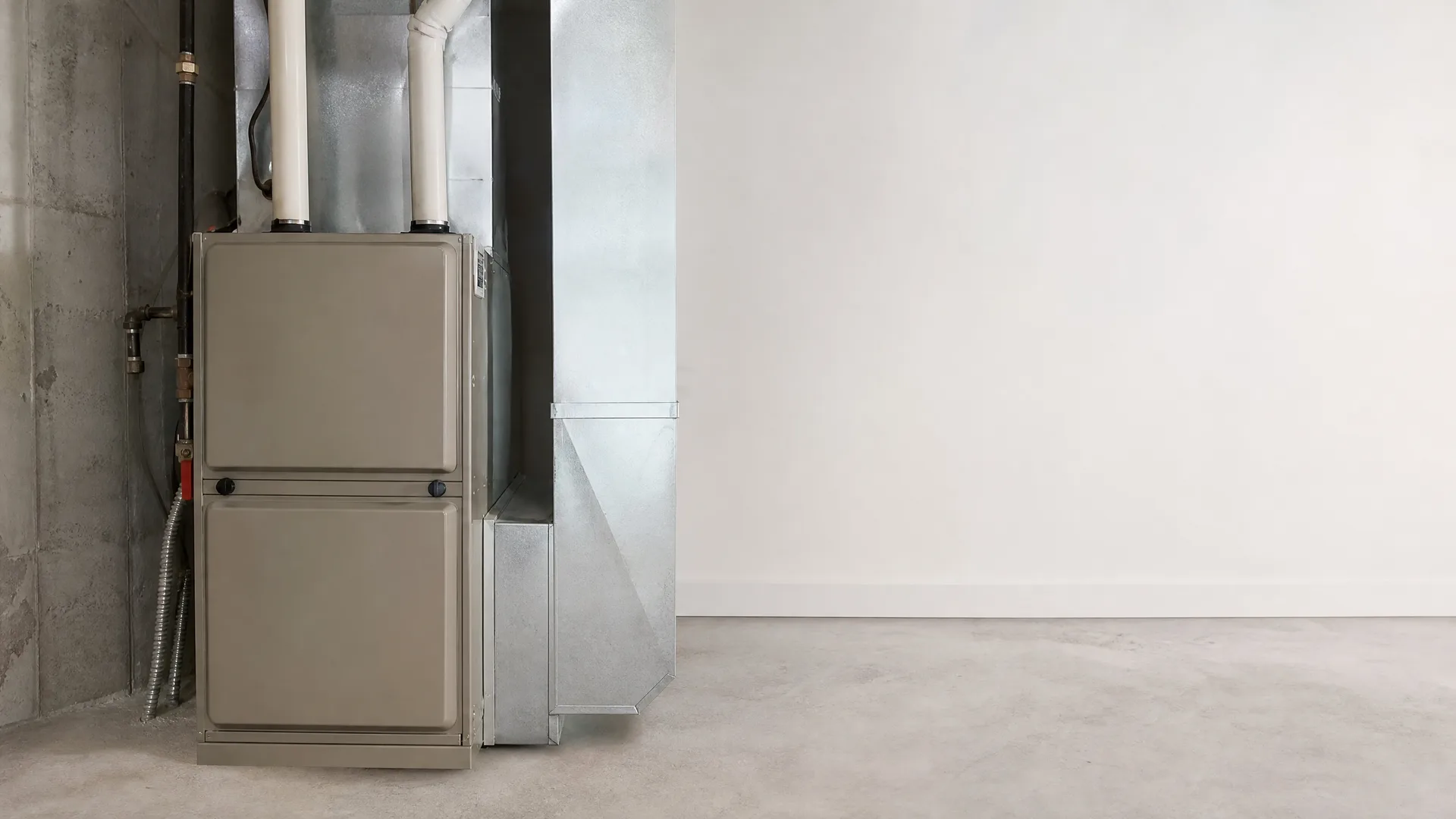
High-efficiency furnaces make condensate
A furnace rated 90 percent or higher cools its exhaust enough that water vapor turns to liquid, and that condensate has to drain out through a plastic line and a condensate pump or trap. If that line clogs with sludge or algae, or the pump fails, the water backs up and finds the nearest low point, usually the floor under the unit. This is normal for the furnace type, not a sign the equipment is failing.
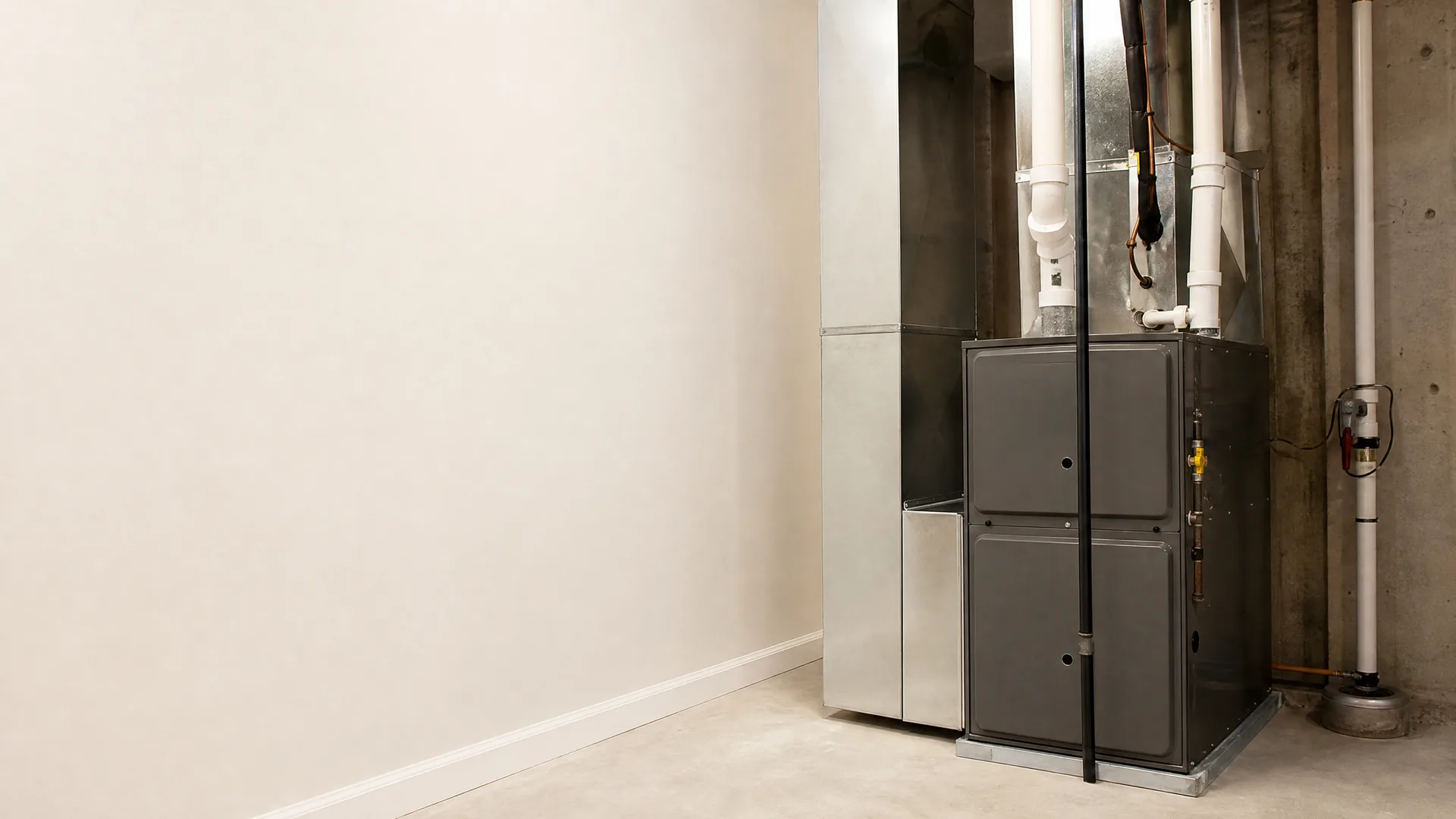
A clogged filter can cause it too
A dirty filter restricts airflow across the indoor coil of a furnace paired with central air, and in cold weather that can cause ice to form on the coil. When the system cycles off or you run the fan, that ice melts faster than the drain pan can handle and drips down through the cabinet. Checking the filter costs nothing and takes a minute, and a reader who has not changed it in months has a likely answer already.
What's that puddle actually doing to your house
Look for water pooling on the floor near the furnace, a damp spot on the carpet or subfloor that keeps coming back, or rust starting to show on the bottom of the cabinet. You might notice a musty smell in the furnace closet or basement, especially if the leak has been going on for a while without anyone spotting it. Left alone, that water can warp flooring, soak into drywall, and feed mold in a spot most people don't check often. If the furnace shuts itself off, that's usually a safety switch responding to the water, not the unit failing outright. Either way, standing water near a gas appliance and its wiring isn't something to leave sitting through another cold night.




Get matched with a furnace pro in Boone County
After you send the request, you're done searching.
Sending the form costs nothing.
How the condensate line works
- Condensate drains downhill from the furnace through PVC pipe to a floor drain, a utility sink, or an outdoor exit point.
- A condensate pump switch can fail stuck, so the pump never kicks on even though the reservoir is full.
- Furnaces without a floor drain nearby rely on that pump, and a tripped float switch there will shut the whole system down.
- A pressure switch hose knocked loose during a filter change lets exhaust condensate drip inside the cabinet instead of down the drain.
- The condensate trap has a bend built in to hold a water seal, and dirt settling in that bend is what usually backs the line up.
- Humidifier lines tied into the same furnace can leak at their saddle valve and get mistaken for a furnace problem.
A high-efficiency furnace makes water as part of normal operation, and that water has to go somewhere. It leaves the heat exchanger and runs through a trap built with a bend in it, the same idea as the trap under a sink. That bend holds a bit of water at all times, and it's what keeps exhaust gas from coming back up the drain line into the house. From there the line runs downhill, either straight to a floor drain or utility sink, or into a small condensate pump that lifts it out when there's no drain nearby. The pump has a float switch inside, and most furnaces are wired so that switch shuts the whole system down if the reservoir fills up, which means a stuck pump shows up as a dead furnace, not just a puddle. Along the way there's also a pressure switch hose, a short rubber line that reads pressure from the draft inducer. It isn't a drain line itself, but it sits close enough to the condensate path that knocking it loose, often during a filter change, lets water drip inside the cabinet instead of down the drain where it belongs. If a furnace runs a humidifier off the same supply line, that's a separate connection with its own saddle valve, and a leak there can look like it's coming from the furnace when it isn't.
Why does a furnace leak more in a Boone County winter?
Winter nights average 24°F
Nights here average 24°F in December, January and February, cold enough that the furnace runs long cycles and makes condensate the whole time.
Heat runs October through April
Heat runs here from October through April, about seven months, so a clogged drain line or stuck pump switch has months to fill and overflow.
48.2% of homes heat with gas
48.2% of homes in Boone County heat with gas, and gas furnaces rated for efficiency are the ones that produce condensate in the first place.
NOAA nClimDiv 1991-2020 · ACS 2020-2024
A furnace leaking water almost always comes down to a clogged condensate line, a stuck float switch, or a cracked heat exchanger, and the difference matters because one is a quick fix and the other means the furnace needs to come out of service. Either way, running it while water keeps dripping risks the cabinet, the floor beneath it, and the control board above the burners. On a cold night in Boone County that's not something to sit on. Once you send in the details through this page, you're not the one who has to track down a contractor who's free and knows furnaces, that search gets handed off, and a local contractor will reach out to look at what's actually happening under your unit. You stop guessing at parts and causes and let someone who does this for a living tell you which one it is. The puddle will still be there when they arrive, but figuring out what to do about it won't be sitting on your shoulders anymore.

Find a furnace repair pro in Boone County
Send the request today and stop worrying about who to call.