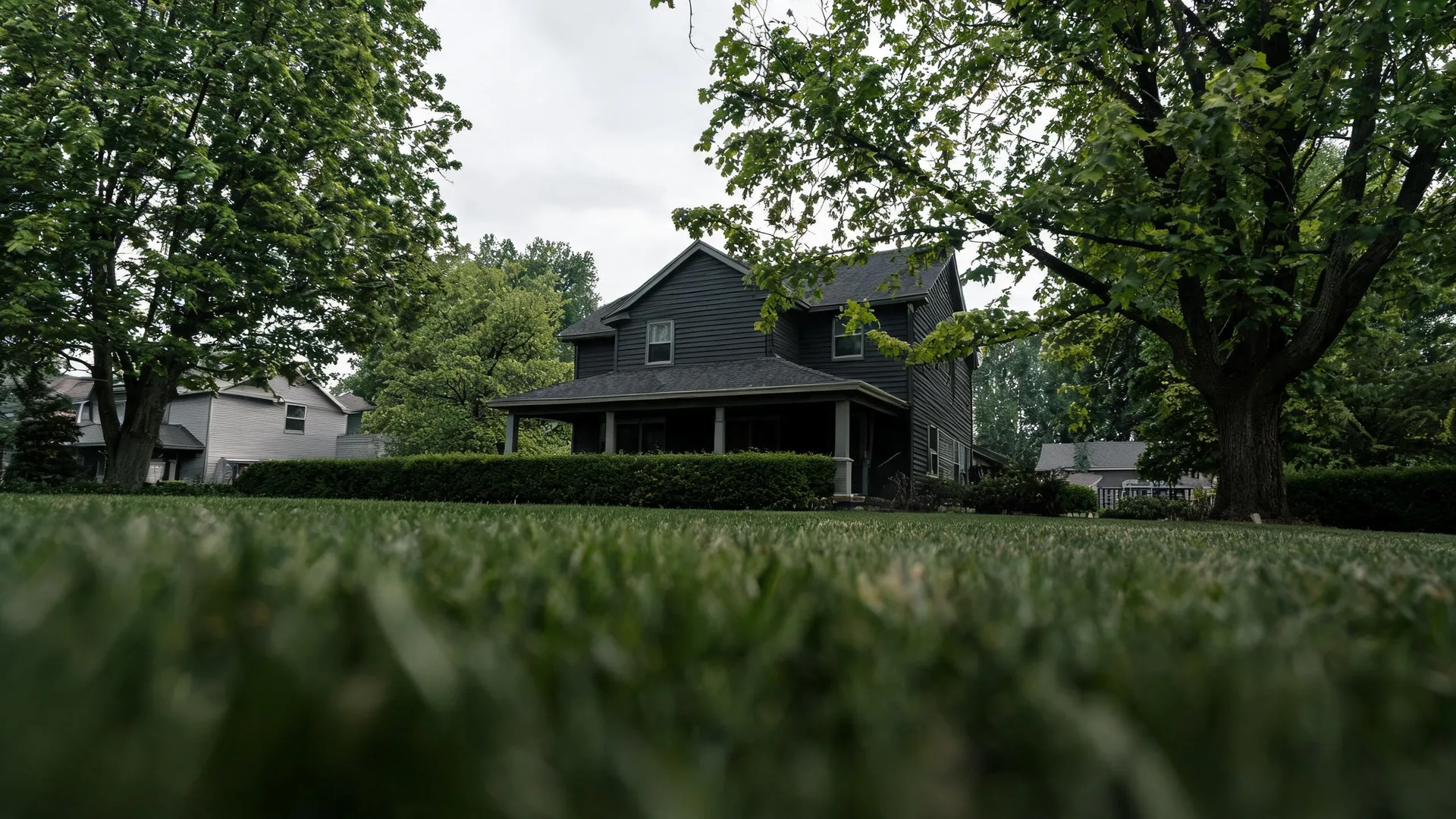




A low ground-level view across a mown lawn toward a dark two-story house with a covered front porch, flanked by large leafy trees under an overcast sky.

Furnace Maintenance in Springfield, MO

Tell us about the job

Takes about a minute. No obligation.

Tune-up, service, or cleaningFurnace or heatingGreene County, MO
Step 1 of 2

What ZIP code is the job in?

Greene County saw 474 severe weather events between 2015 and 2024. Damaging wind caused 302 of those, and hail hit the county 140 times in that span. A furnace sits next to a home's electrical and gas lines, and storms put strain on both. Fourteen tornadoes touched down in the county in that same window, along with 14 winter storms bringing snow, ice or blizzard conditions. Statewide, 19% of households went at least 24 hours without power in 2024. A furnace that hasn't been looked at since the last round of storms is a bad thing to find out about during the next one.

Half the furnaces in Greene County are in homes built since 1982.

A furnace that young is worth a yearly check, so it keeps working through the next storm instead of failing during one.

Most of Greene County heats with gas, and gas furnaces need more than a filter change

52.2% of homes heat with gas
Heat runs October through April
Winter nights average 25°F

Heat in Greene County comes on in October and runs through April. That first cold snap tends to be the hardest test a furnace faces all year, especially after sitting idle since spring. A furnace with a cracked heat exchanger or a weak igniter usually shows it the first time it has to run for hours straight, not during a quick test cycle. Book the check in September, before the season starts, so a contractor can catch that kind of problem while the furnace is off instead of during the first cold week. Overnight lows here average 25°F across December, January and February, and a furnace that fails during one of those nights is a harder fix than one caught in September.

Get your furnace checked before the next storm finds the problem for you

A furnace that's been sitting since the last storm season hasn't been checked since. Get it looked over now, before the next round of wind or ice puts it, and the power, to the test.

Find a contractor
A man in a dark shirt and tan work pants, seen from behind, carries a canvas tool bag up wooden steps toward a blue front door of a gray clapboard house, with a shrub in a blue planter beside the door.
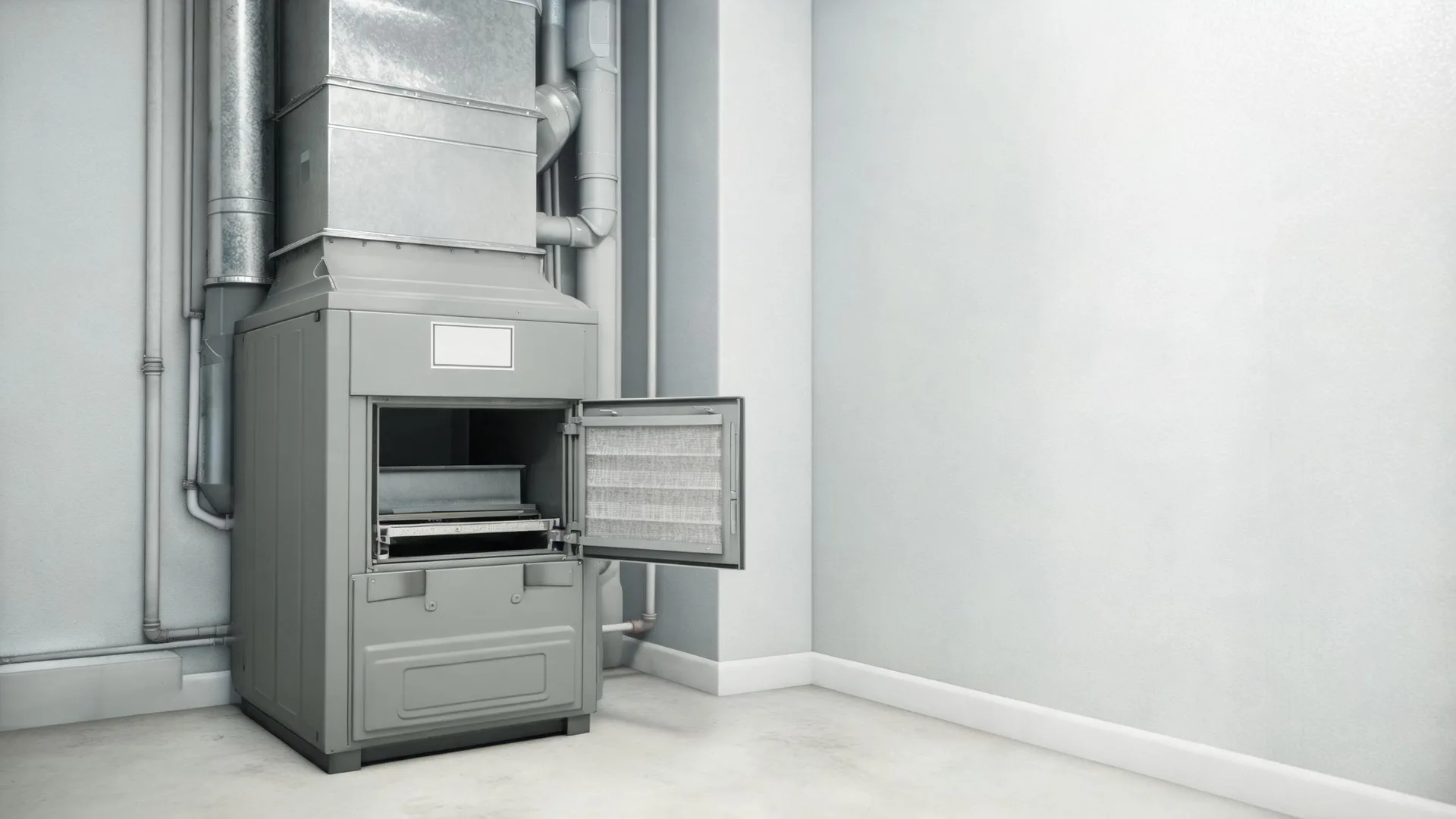
A gray residential gas furnace installed in an unfinished basement, connected to sheet-metal ductwork and PVC pipes.

What a tune-up catches before the furnace tells you

A flame that looks fine to the eye can still be burning wrong. A technician checks its color and shape, because a flame that should burn blue and even but is instead yellow and lazy points to incomplete combustion, and that means carbon monoxide. None of that shows up from across the room. Inside the cabinet, the heat exchanger can develop a hairline crack that no homeowner would ever see without pulling the panel and looking with a light. That crack lets exhaust mix into the air the blower pushes through the house. A technician also checks the flue for a proper draft, because a blocked or weak draft sends exhaust back into the house instead of outside. The flame sensor gets cleaned or tested too. It's a small rod that tells the control board the flame is actually lit, and when it's coated with residue it can misread a good flame as no flame at all, shutting the furnace down for no reason anyone can see from the thermostat. None of this announces itself with a smell or a sound. The furnace just runs, until the day one of these fails outright.

Change the filter

A dirty filter chokes airflow across the heat exchanger. The furnace runs longer to push the same heat through the house, and the extra strain falls on the blower motor and the exchanger itself. A filter is cheap and sits in a slot anyone can reach. Check it once a month during the heating months and swap it when it looks gray instead of white.
Leave the rest alone

The burners, the flame sensor, the heat exchanger and the flue all need a trained eye and the panel off to check properly. Opening the cabinet without knowing what you're looking at risks knocking a wire loose or missing a crack that only shows up under a light held at the right angle. Keep the area around the furnace clear of boxes and anything flammable, and leave the vents in every room open. That's the safe work. The rest waits for the yearly check.

A quick tune-up means someone swaps the filter, glances at the flame, and writes up the invoice. A thorough one means the panels come off. The burners get pulled and cleaned, not just looked at, because soot buildup changes how they burn even when the flame looks fine from the front. The flame sensor gets removed and scrubbed, not wiped. The inducer motor and blower wheel get checked for dust buildup that throws off airflow in ways a filter change won't fix. A technician doing this right also tests the gas pressure at the manifold, because pressure that drifts too high or too low changes the whole burn. Ask what gets checked before the work starts. If the answer is just filter and thermostat, that's not a tune-up. That's a glance.

A tune-up also means looking at the parts that don't fail often but cause real trouble when they do. The limit switch is one. It shuts the burners off if the air inside the furnace runs too hot, which happens when airflow is blocked somewhere downstream. A technician checks that it trips at the right point, because a limit switch that's stuck or miscalibrated either shuts the furnace down for no reason or lets it keep firing when it shouldn't. The igniter gets inspected too. Hot surface igniters are thin and brittle, and they weaken with every cycle before they finally crack. A weak one still glows but may not get hot enough to light the gas reliably, and that shows up as a furnace that tries to start, fails, and tries again. Belts and bearings on older blower assemblies get checked for wear, since a belt that slips or a bearing that's dry changes the sound of the blower before it changes anything else. None of this is guesswork. It's the same sequence, checked the same way, every time someone does the job right.