A illuminated two-story red brick house on a quiet residential street at dusk, flanked by mature trees under a deep blue evening sky.

Furnace Maintenance in Kansas City, MO

Tell us about the job

Takes about a minute. No obligation.

Tune-up, service, or cleaningFurnace or heatingJackson County, MO
Step 1 of 2

What ZIP code is the job in?

This county gets hit a lot

Jackson County logged 367 severe weather events between 2015 and 2024, including 212 damaging wind events, 127 hail events and 16 tornadoes. Ten winter storms brought heavy snow, ice or blizzard conditions in that same stretch.


Outages hit furnaces too

Close to one in five Missouri households went at least 24 hours without power in 2024. A furnace needs electricity to run even when it burns gas, so a storm that knocks out power can shut down heat along with everything else.

Furnaces here start working in October and don't let up until April.

Get the furnace checked in September, before it has to carry the next seven months.

Half the furnaces here are older too

Half the homes here were built by 1970
Climate zone 4A
Heat runs October through April
Most homes here run on gas69.5% of homes in Jackson County heat with utility gas.

If your furnace has never had anyone look inside it, a yearly check is how a contractor finds a cracked heat exchanger, a worn igniter or a blower drawing too many amps while it's still a repair and not a breakdown. That matters more the longer a system has been running. Half the homes in this county were built in 1970 or earlier, and a furnace doesn't last as long as the house does, so whatever is heating yours now has likely been swapped in at some point. If you don't know when that happened, that's reason enough to have it checked. A furnace that's wearing out runs right up until the day it doesn't.

Have the furnace checked before storm season leans on it

Wind, hail and winter storms all turn up in this county's weather, and any of them can knock out power long enough to matter. A tune-up now is when a contractor can find the worn part or the loose connection before a storm finds it first.

Find a contractor
A gray residential gas furnace installed in an unfinished basement, surrounded by ductwork, a metal flue pipe, and a gas supply line.

A furnace doesn't ask for help until it stops

A furnace that never gets opened up keeps running the same way it has for years, right up until a part that was already failing finally gives out. Dust builds on the burners and changes how the flame sits. A flame sensor coated in residue stops reading the flame correctly and starts shutting the system down mid-cycle. The blower motor wears on its bearings and pulls harder to do the same job, which is the kind of strain that ends in a tripped limit switch or a burnt motor winding. None of that announces itself ahead of time. The furnace heats fine until the morning it doesn't, and by then the part that failed has usually been struggling for a while.

Change the filter

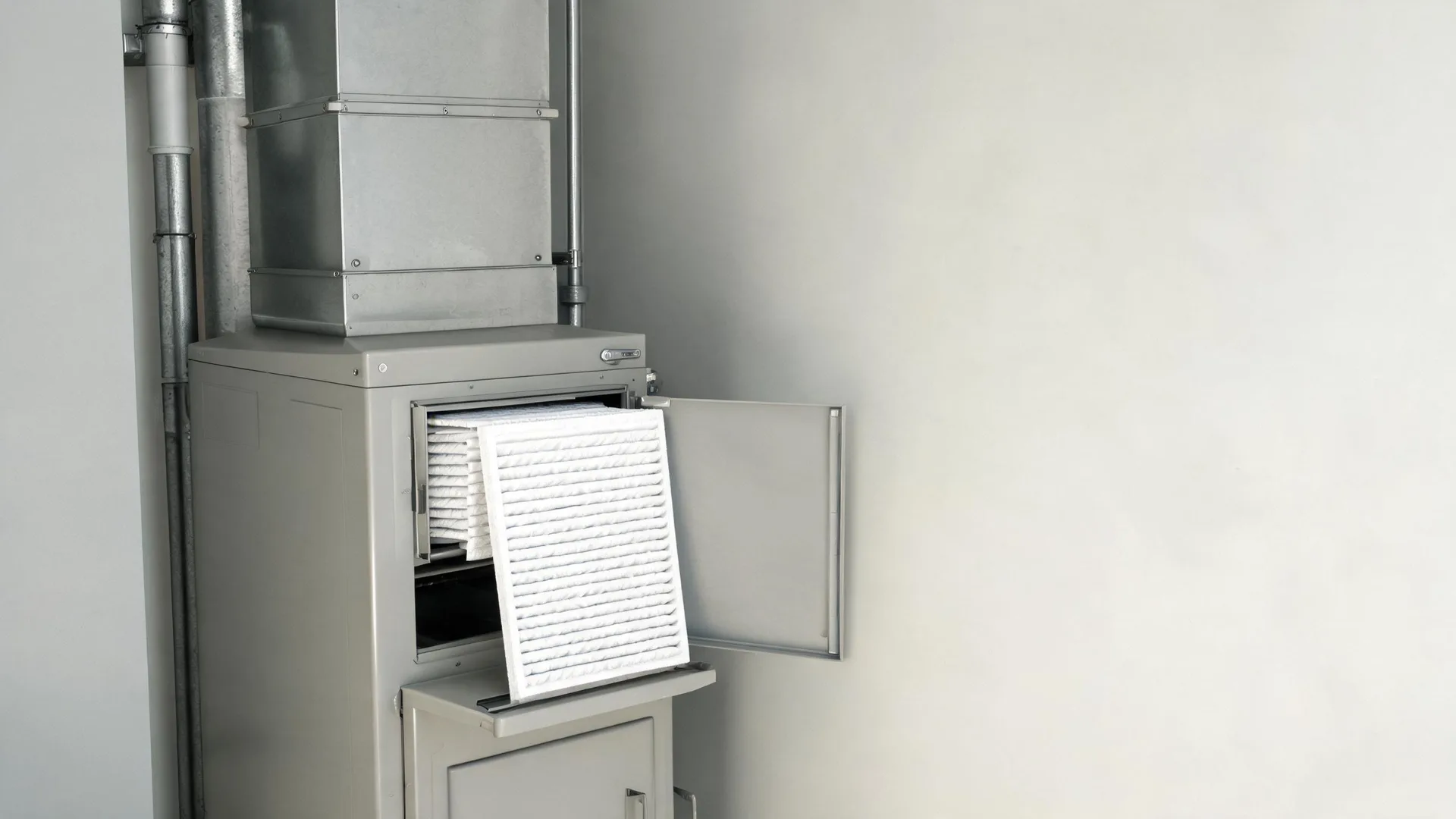
A dirty filter chokes airflow across the heat exchanger, and that alone causes a lot of the no-heat calls a contractor sees. Check it every month during the cold stretch and hold it up to a light. If you can't see through it, put a new one in. A clean filter also keeps dust off the burners and the flame sensor, which are the parts a tune-up has to clean by hand.

Keep the area clear

Keep boxes, laundry and anything else off the furnace and away from its vents. It needs room to pull in air and push it back out, and anything blocking that makes the blower work harder. Outside, keep the intake and exhaust pipes clear of snow, leaves or nests. If you ever smell gas or notice soot around the unit, shut it off and call for service. That's not a wait and see.

A tune-up is mostly about catching the signs before they turn into a no-heat call. Short cycling is one, where the furnace fires up, runs for a minute or two, then shuts off before the house warms up. That can mean a flame sensor that needs cleaning or a clogged filter choking the airflow it needs. A burner flame that's flickering or mostly yellow instead of steady blue is worth a look too, since that's often a sign of incomplete combustion. Rattling, grinding or a hard metallic clunk when the blower kicks on usually points to a motor or bearing wearing out. A furnace that takes longer to heat the house than it used to, or runs almost constantly without catching up, is working harder than it should have to. Any of these on their own is worth a call before it turns into a cold morning with no furnace at all.

A tune-up starts with the heat exchanger, since that's the part separating the flame from the air blowing through your house, and a contractor checks it for cracks or corrosion before anything else. The burners get cleaned and the flame checked for a steady blue shape, not the lazy yellow of something not burning clean. The igniter gets tested, since it's the part that lights the gas and the one most likely to wear out with age. The flame sensor gets wiped down, because residue on it is what causes a furnace to shut off mid-cycle for no reason anyone can see. The blower gets checked too, the motor, the belt if it has one, and the amp draw, since a motor pulling too hard now is a motor that burns out later. Gas pressure gets tested and the vent system gets checked for a clear path outside, since exhaust that can't escape is a safety problem, not a comfort one. Every electrical connection gets tightened, because a loose one is what turns into arcing or a part failing long before it should.