Profile view of a bearded man wearing a dark green baseball cap and a dark gray T-shirt against a plain light background.

Signs of a cracked heat exchanger in Missouri

RepairFurnace or heatingMissouri
Step 1 of 2

What ZIP code is the job in?

What are the signs of a cracked heat exchanger?

Your furnace has been running most nights now, and something about it has you uneasy, maybe a smell, maybe a sound, maybe just the fact that it's old and you've read what a cracked heat exchanger can do. You want to know what to actually watch for, not a vague warning, so you know whether to worry tonight or wait and see.

A cracked heat exchanger shows up as a smell, a sound, or a flame that looks wrong

Watch for a faint smell like formaldehyde when the furnace runs, soot building up inside the cabinet, or the burner flame flickering and leaning instead of burning straight and steady. Some furnaces trip their carbon monoxide detector only while the blower is running, because air moving past the crack pushes exhaust into the house air instead of up the flue. A heat exchanger cracks from years of heating and cooling as the metal expands and contracts each time the furnace cycles on and off. Missouri winters mean that furnace cycles on and off for months at a stretch, which is exactly the stress that wears a heat exchanger down. If you notice any of these signs, shut the furnace off and have it looked at before running it again.

A gas furnace with two gray access panels stands against a plain wall in a basement, connected to sheet-metal ductwork, white PVC vent pipes, and a yellow gas line.

Why the crack forms

The heat exchanger swells when the burner fires and shrinks when it shuts off. That happens every cycle, all winter. After years of that movement, metal fatigues at the seams and welds, and a crack opens. A furnace that short cycles, or one with a cracked exchanger already, puts more stress on that metal every time it fires, so the problem tends to move faster once it starts.

A gray high-efficiency furnace in a basement corner with white PVC vent pipes, copper and black gas piping, and sheet-metal ductwork beside a plain white wall and wooden stair framing.

What a technician checks

A cracked exchanger can let combustion gas mix with the air your furnace blows through the house, so a technician checks it with a camera run inside the chambers, not just a glance from outside. Some will also test flue draft and look for soot or rust around the burner compartment, since those point to the same failure. Gas furnaces in Missouri homes get this kind of check most winters when a technician is already there for other repairs.

A woman in a cream sweater and jeans stands in the open doorway of a white stucco house, holding the dark door, while a man in a dark quilted jacket seen from behind walks toward the entry past potted plants.

What it means for your house

A cracked heat exchanger doesn't just mean a repair bill. It means carbon monoxide can mix into the air your furnace blows through the house, the same air moving through your vents right now while you sleep. Missouri winters run long enough that your furnace cycles on most nights for months, which is a lot of chances for exhaust to leak through a crack instead of venting outside like it should. A carbon monoxide detector near the bedrooms is the one piece of equipment that tells you what your nose and ears can't.

If your furnace is older and this has you checking it every time the burner kicks on, that's reason enough to get it looked at rather than live with the question. Finding someone who works on furnaces in your area, explaining the smell or the sound, getting a quote, doing that again with a second contractor to compare, that's the part that eats your evening. You can skip past it and get matched with a contractor who handles this kind of inspection, one who'll reach out to you directly about what you're dealing with.

Interior corner with a beige sofa holding a dark green and a light cushion and a textured throw, a potted small-leaved tree beside a white-framed window, and a dark shallow bowl on a wooden coffee table in the foreground.
A gray furnace with white PVC vent pipes stands beside sheet-metal ductwork in a basement with a smooth concrete floor, exposed wood framing, and plastic sheeting on the walls.

Running the way it should

A furnace like this heats evenly and quietly. The burner fires, the exchanger holds its shape, and the exhaust runs out through the flue same as always. No rust streaking down the cabinet, no odd smell when the blower kicks on.


A beige furnace with two access panels stands against a concrete basement wall, with galvanized sheet-metal ductwork, a white PVC pipe, flexible conduit and insulated ducting around it.

Running the way it shouldn't

Rust on the cabinet like this often means moisture has been sitting somewhere it shouldn't. That same corrosion can reach the exchanger inside. Paired with a burner flame that flickers or a smell when the furnace runs, it's worth having a contractor look before the next cold stretch.

A woman in a cream sweater with her hair in a bun laughs while seated at a stone counter holding a glass of red wine, in a dimly lit interior with a sofa, houseplants and a large window at night.
A woman with long dark hair in a cream knit sweater laughs while looking off to the side, seated in front of a dimly lit kitchen with an island, stools, open shelving and a potted plant, with a glass of red wine in the foreground.
A smiling woman with long dark wavy hair in a light knit sweater sits at a marble counter with a glass of red wine, with a dimly lit living room and kitchen in the background.
A smiling woman with long wavy brown hair in a beige sweater sits at a white marble counter with a glass of red wine, with a living room, dining table and kitchen cabinets behind her.
A gray high-efficiency furnace with two white PVC vent pipes stands against sheet-metal ductwork in an unfinished basement with concrete floor and walls and exposed wood joists.

A pro who works on furnaces

Describe what your furnace is doing once, in one form.

A local pro who knows furnaces gets your details and gets in touch.

Start one form

Sending the form costs nothing.

Call it now or ride it out

Repair now

  • A cracked heat exchanger needs to be replaced or the furnace replaced entirely, since the crack itself can't be welded shut safely.
  • Once a contractor shuts off the furnace and tags it, you're not heating the house at all until the work is done.
  • The inspection that finds the crack usually also tells you whether the rest of the furnace, the blower, the inducer, the ignition system, is still sound enough to be worth saving.
  • You get a straight answer about whether carbon monoxide has actually been getting into the air in your house.
  • If the furnace is still within its expected life, replacing just the exchanger can cost less than a full system swap.

Wait it out

  • Every cycle the furnace runs, the crack opens a little further as the metal expands and contracts around it.
  • Carbon monoxide exposure builds quietly, and Missouri winters mean the furnace is running most nights for months.
  • A furnace limping along on a cracked exchanger can still throw heat, which makes it easy to put off calling anyone.
  • The longer it runs cracked, the more likely the damage spreads to the blower or ductwork around it.
  • Waiting doesn't change what the repair involves, it just adds the time you spent breathing that air before someone looked at it.
A dark high-efficiency furnace on a concrete pad in a basement, connected to galvanized ductwork, white PVC vent pipes, and copper and black gas piping, with concrete walls and wood framing nearby.

Normal operation

This is what a furnace looks like when nothing is wrong. The cabinet is clean, the flue and condensate lines run straight, and the gas line is tight at every joint. No rust, no scorch marks, no gaps at the seams. The exchanger inside is doing its job unseen.

A gas furnace with a louvered upper panel stands on a concrete pad in a basement, flanked by sheet-metal ductwork, white PVC and metal pipes, and insulated columns.

Furnace in question

This is the kind of furnace that gets a second look. Older, with a flex line running to it and a drain pipe curving toward the floor. Age alone doesn't mean a crack has formed, but it's exactly the furnace a contractor would want to inspect before another winter here.

A smiling bearded man in a navy crewneck sweater sits at a dinner table with a glass of red wine, plates and glasses in the foreground, in a dimly lit room with a lamp and framed picture behind him.
A woman in a dark gray sweater reclines on a light sofa with eyes closed and a slight smile, under a textured gray blanket with an open book resting on her lap, with a lit table lamp and plant in the background.

Most of what points to a cracked heat exchanger isn't something you'd catch walking past the furnace. A technician threads a camera into the cabinet because the crack usually forms at a seam or weld you can't see from outside, let alone through a grate. Pressure changes give it away too. With the blower off, a contractor can watch whether the flame moves when it shouldn't, since a crack lets air pass where it has no business passing. The burner compartment itself tells a story if you know what you're looking at: soot or rust where combustion gases are leaking out instead of venting through the flue. A limit switch that keeps tripping is the furnace's own way of saying it's overheating, which puts more stress on the exchanger with every cycle. None of this replaces a carbon monoxide detector near the furnace. It won't tell you about a crack before it happens, but it can catch the leak before you'd ever notice it on your own.

How a technician checks for a crack

  • A technician checks for a cracked heat exchanger with a camera threaded inside the cabinet, since the crack usually sits where visual inspection can't reach.
  • Carbon monoxide detectors near the furnace can catch a leak before anyone in the house smells or feels anything wrong.
  • A flame that flickers or changes shape when the blower kicks on points to air leaking through a crack and disturbing the burner.
  • Soot or rust forming around the burner compartment often means combustion gases are escaping somewhere they shouldn't.
  • A furnace that trips its limit switch repeatedly can be overheating in a way that stresses the exchanger at the seams.
  • Some contractors test for a crack by shutting the blower off and watching whether the flame reacts to pressure changes inside the cabinet.
A beige high-efficiency furnace with white PVC vent pipes stands beside galvanized sheet-metal ductwork in a basement with a concrete floor, exposed wood studs, and metal piping along the wall.
A furnace like this moves heat into the house without any sign of what's going on inside the cabinet, which is exactly how it should be.
An older beige furnace with a louvered vent panel stands on a concrete basement floor beside galvanized sheet-metal ductwork, a metal flue pipe and vertical pipes along a concrete wall.
This one has sat long enough to rust, and a flue that's been leaking anywhere along its run won't look like much from the outside.
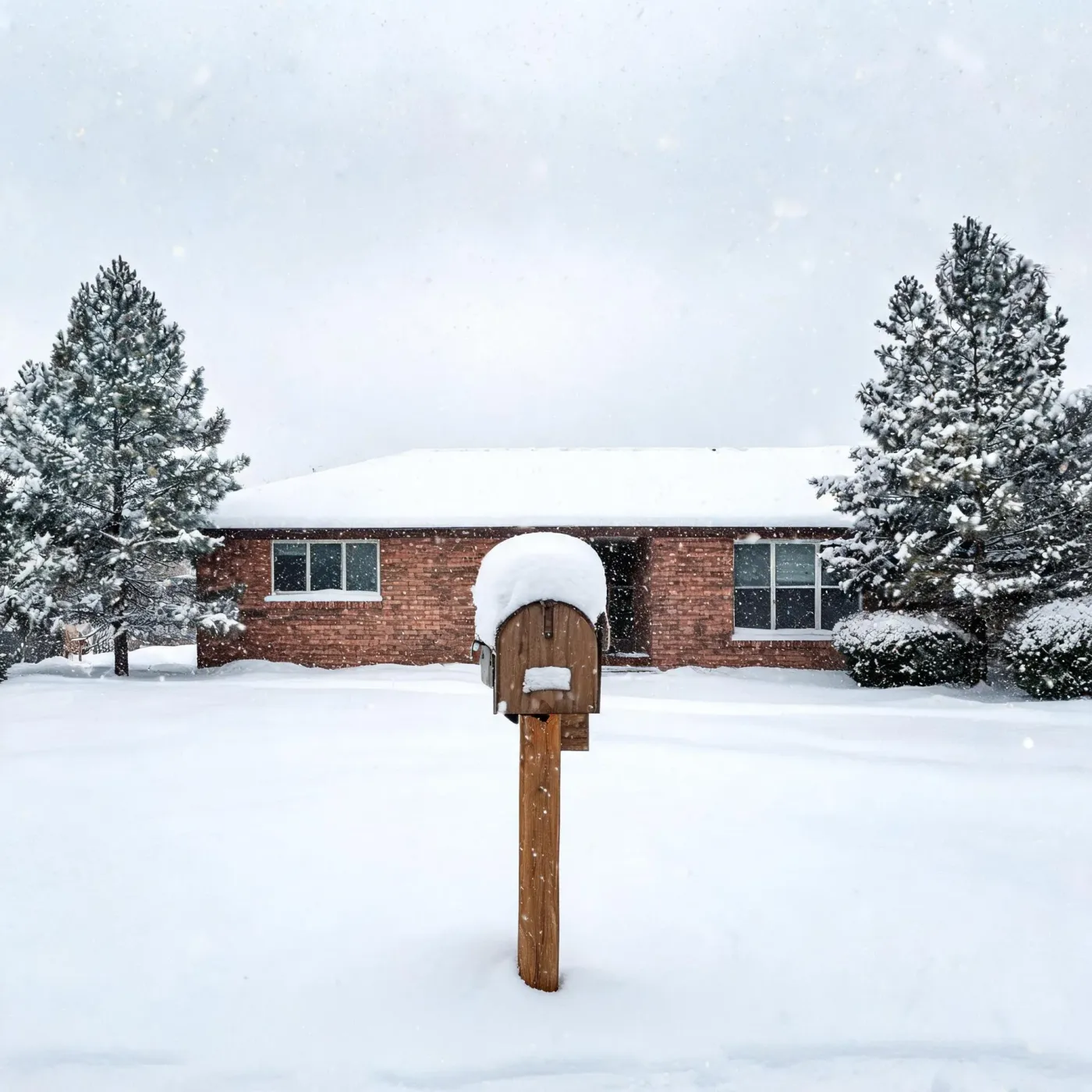
A snow-covered wooden mailbox on a post stands in a deep snowy yard in front of a single-story brick house flanked by snow-laden pine trees during falling snow.

Winter nights across Missouri average 25°F, according to NOAA climate data. That means your furnace is firing through long stretches of cold, not just quick bursts in the morning. Every one of those cycles flexes the heat exchanger as it heats up and cools back down. Over years of nights like that, the metal is what eventually gives out at a seam or weld. If your furnace is older and you've noticed it running longer to keep up on the coldest nights, that's more cycling, more flexing, and more wear on the same spot.

NOAA nClimDiv 1991-2020 county normals weighted by homes

A gray furnace cabinet in a basement, connected to galvanized sheet-metal ductwork and white PVC pipes, against a concrete wall with exposed metal piping and insulation overhead.
Before you get your furnace repair
A gray high-efficiency furnace with two PVC vent pipes stands in an unfinished basement beside sheet-metal ductwork, a framed and plastic-covered wall, and a bare concrete wall with vertical pipes.
After you get your furnace repair

Winter nights average 25°F statewide

At 25°F, your furnace isn't just kicking on here and there, it's holding a steady burn most of the night to keep up. That's a lot of expansion and contraction on an exchanger that already has a crack starting somewhere in the seams.

NOAA nClimDiv 1991-2020 county normals weighted by homes

A cracked heat exchanger comes down to a short list: rust on the cabinet, a strange smell when the blower runs, soot around the seams, a flame that flickers instead of burning steady, a carbon monoxide alarm that won't stop. Any one of those is reason enough to get a furnace looked at before the next cold night. What you don't have to do is spend your evening on the part that has nothing to do with your furnace: searching through contractors, calling a few, explaining the smell and the sound and the age of the unit all over again to each one, then trying to compare quotes that aren't quite answering the same question. That part goes away. You answer a few questions about what you're seeing and what your furnace is doing, and a contractor who handles this in Missouri reaches out to you directly. Your furnace is either fine or it isn't, and either way you'll know soon, with someone who already has the details instead of starting from nothing.

A covered porch with a wood front door with six upper glass panes, a lantern wall sconce, tapered column on a stone base, potted ferns and flowers, a woven doormat, and wide steps leading to a paver walkway bordered by shrubs and white hydrangeas.
A beige upholstered sofa with a cream cushion and chunky knit throw sits beside a white-framed window, with a leafy potted plant in a stone vase against a tan wall.
Sunlit corner of a room with a linen curtain beside a window, built-in shelves holding ceramic vases, wooden bowls, a potted green plant, stacked books and a woven basket, above a textured rug.
A dark wood three-drawer dresser against a pale wall holds a tall ceramic vase with leafy branches, stacked books and a shallow bowl, with a framed print above, a woven basket on the wood floor at left, and an upholstered sofa with a green pillow in the foreground.
A cream upholstered sofa with a textured ivory cushion and a rust-colored cushion sits beside a window with sheer linen curtains, with a potted leafy plant behind it and a wooden bowl on a wood table in the foreground.

Get your furnace to the right pro

Answer a few questions instead of calling shop after shop.

Skip calling around

You're not committing to anything by asking.