



A dark two-story house with a wide covered front porch, framed by large leafy trees, behind a trimmed hedge and a striped mowed lawn.

Furnace Installation in Springfield, MO

Tell us about the job

Takes about a minute. No obligation.

New system or replacementFurnace or heatingGreene County, MO
Step 1 of 2

What ZIP code is the job in?

Greene County saw 474 severe weather events between 2015 and 2024. Most of that was wind, 302 events, with 140 hail events and 14 tornadoes mixed in. Add 14 winter storms with heavy snow and ice, and you've got a county that gets hit from every direction depending on the season. Statewide, almost one in five Missouri households lost power for a day or more in 2024. A furnace needs electricity to run even when the fuel is gas, since the igniter, the blower and the control board all depend on it. When you're picking a system and where it goes, this history is worth weighing alongside the fuel and the ductwork.

7 months
October through April, your furnace is on duty
25°F
the average winter night it heats against
52%
of homes here heat with gas, so most furnaces here burn gas
80% AFUE
the federal minimum any new unit must meet
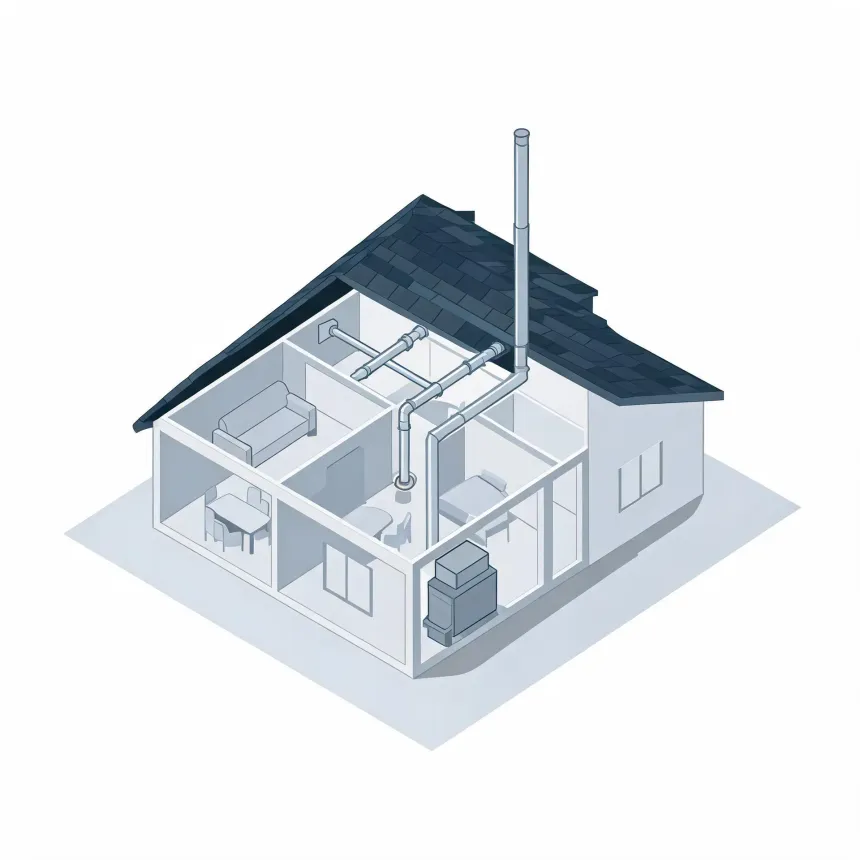
Isometric cutaway illustration of a single-story house showing interior rooms with furniture, ductwork and piping running to a tall vertical flue through the dark shingled roof, and a furnace-like appliance unit on the floor.
Your furnace works hardest from November through March.

NOAA nClimDiv, 1991–2020 normals

Furnaces here go on in October.

Get yours installed in September and it's done before the cold and the rush both hit.

Cheap gas here means the payback math favors reliability over the top efficiency number

Climate zone 4A
Heat runs October through April
Winter nights average 25°F

Greene County falls in climate zone 4A, which asks real work of a furnace in both directions, muggy summers and cold winters. Any gas furnace installed today has to turn at least 80 percent of the gas it burns into heat over the winter. That's the federal floor, and it applies no matter who installs it or what brand goes in. That minimum stays in place until December 18, 2028, when new furnaces will have to hit 95 percent. A furnace bought now, before that date, only has to meet the 80 percent mark, which still leaves room to choose a system based on what this area actually needs rather than chasing the highest efficiency number on the shelf.

Plan for the outage before the furnace goes in

Ask about a furnace that still runs through a power cut, or at least restarts clean once the power's back, and talk through where the install puts the parts that storms get at. That's a decision for installation day, not after.

Find a contractor
A man in a cap, gray long-sleeve shirt and brown work pants walks up porch steps toward a dark blue front door, carrying a canvas tool bag with tools in its side pockets, beside a potted shrub.
A gray high-efficiency gas furnace installed in an unfinished basement, surrounded by gas lines, a condensate drain, and sheet-metal ductwork.

What the efficiency number is actually telling you

The percentage on the label tells you how much of the gas becomes heat in your house and how much goes straight out the flue. A furnace rated at the federal minimum turns most of the gas into heat and vents the rest. A high efficiency furnace captures more of that heat before it escapes, which is why those models use a second heat exchanger and a drain for the condensation that forms. That second exchanger is also why high efficiency furnaces vent through PVC pipe instead of a metal flue. Neither type works harder or wears out faster because of its rating. The rating just tells you how much of what you burn turns into warm air versus how much goes up the vent. A furnace keeps that rating for as long as it runs right. A clogged filter, a cracked exchanger or a dirty flame sensor will drag real-world performance below the number on the sticker no matter how high that number started out.

The old furnace has to come out whole

A gas furnace doesn't get stripped down piece by piece in the cabinet. The installer disconnects the gas line, pulls the flue or vent pipe, and disconnects the wiring and the duct connections at the plenum, then the whole cabinet comes out in one piece. The gas line gets capped and pressure tested before anyone leaves. Nothing about that step changes based on what's going in to replace it.

What's inside decides where the new one can go

The old furnace sitting there already tells the installer what the ductwork, the gas line and the vent can handle, since the new furnace has to tie into all three. A higher efficiency furnace vents through PVC instead of the metal flue the old one used, so that connection gets rebuilt rather than reused. The gas line and ducts usually carry over as they are, unless the new furnace's input or airflow calls for a change.

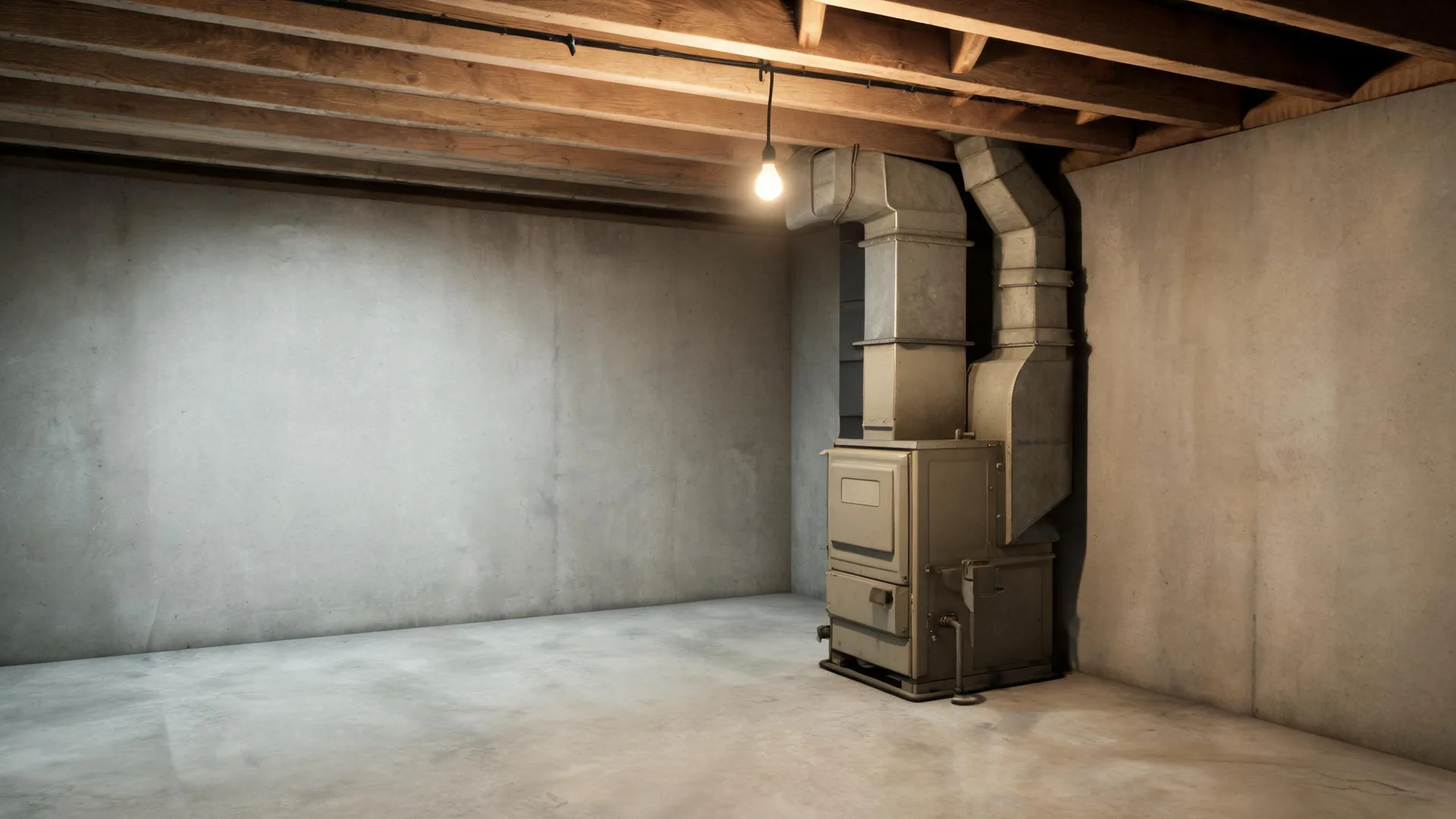
An unfinished basement featuring exposed ceiling joists, a metal HVAC unit with round ductwork, a hanging light bulb, and scattered boxes and debris along the left wall.

A high-efficiency gas furnace would save about $150 a year to run in Greene County compared with a gas furnace.

  • A high-efficiency gas furnace$720 a year
  • A gas furnace$870 a year

Estimates for a typical Greene County home, from EIA household energy data, Missouri fuel prices and NOAA climate normals. Your home will differ.

Just over half the homes in Greene County heat with gas, more than any other fuel. Electricity comes in second, and a small share runs on propane. When that many homes already have a gas line and a flue in place, putting in another gas furnace is usually the straightforward path. It means working with connections already sized for the job rather than adding gas service where none exists. None of that changes what the furnace has to handle once the power drops, since the blower and controls still need electricity no matter what fuel heats the air.