A row of illuminated two-story brick houses with front porches and mature trees photographed at twilight.

Furnace Installation in Osage Beach, MO

Tell us about the job

Takes about a minute. No obligation.

New system or replacementFurnace or heatingCamden County, MO
Step 1 of 2

What ZIP code is the job in?

This county sees real storms

Camden County logged 142 severe weather events between 2015 and 2024, including 57 damaging wind events, 73 hail events and 4 tornadoes. A new furnace install is a good time to plan for that, not after a storm has already made the decision for you.

Outages last longer here than most places think

Statewide, 19% of Missouri households went at least 24 hours without power in 2024. A furnace that runs on electricity, directly or through its blower and controls, stops working when the power does, so an outage plan matters as much as the unit itself.

7 months
October through April, your furnace is on duty
25°F
the average winter night it heats against
80% AFUE
the federal minimum any new unit must meet
Isometric cutaway illustration of a single-story house in gray tones, showing interior rooms with furniture, ceiling ductwork, and an exterior furnace unit with a tall flue pipe.
Your furnace works hardest from November through March.

NOAA nClimDiv, 1991–2020 normals

Furnaces in Camden County start running in October.

Get the new furnace in during September, so install day isn't competing with the season's first cold nights.

Most furnaces here already run on electricity, and the next one should too

75.9% of homes heat with electricity
Climate zone 4A
Heat runs October through April
Electricity here costs you either wayMissouri electricity ran $37.84 per million Btu in 2024, and most furnaces here run on it all winter

Camden County falls in climate zone 4A, which asks real work of both heating and cooling systems. Any furnace installed here has to meet the federal minimum for that zone. Furnaces built from November 19, 2015 on have to turn at least 80 percent of their gas into heat over the winter, and that's the floor, not a target to aim for. That floor is set to rise: furnaces built on or after December 18, 2028 will need to hit 95 percent. A unit bought now still only has to clear 80, so it's worth asking where the one you're looking at actually falls. Homeowners who replace a system before a storm forces the issue get to pick the efficiency level, instead of taking whatever's on the truck.

Plan for the outage now, while you're still choosing the furnace

When the power goes out here, it tends to stay out, and a furnace that depends on electricity goes down with it. Deciding now where the outdoor unit sits, how it is protected from wind and hail, and what backup options exist for heat is part of the install, not an afterthought.

Find a contractor
A man in a gray T-shirt and tan work pants, seen from behind, carries a worn canvas tool bag up concrete steps toward a blue front door of a house with gray siding and a potted shrub.
A gray high-efficiency gas furnace installed in an unfinished basement, surrounded by gas lines, a condensate drain, and sheet-metal ductwork.

The old furnace doesn't linger

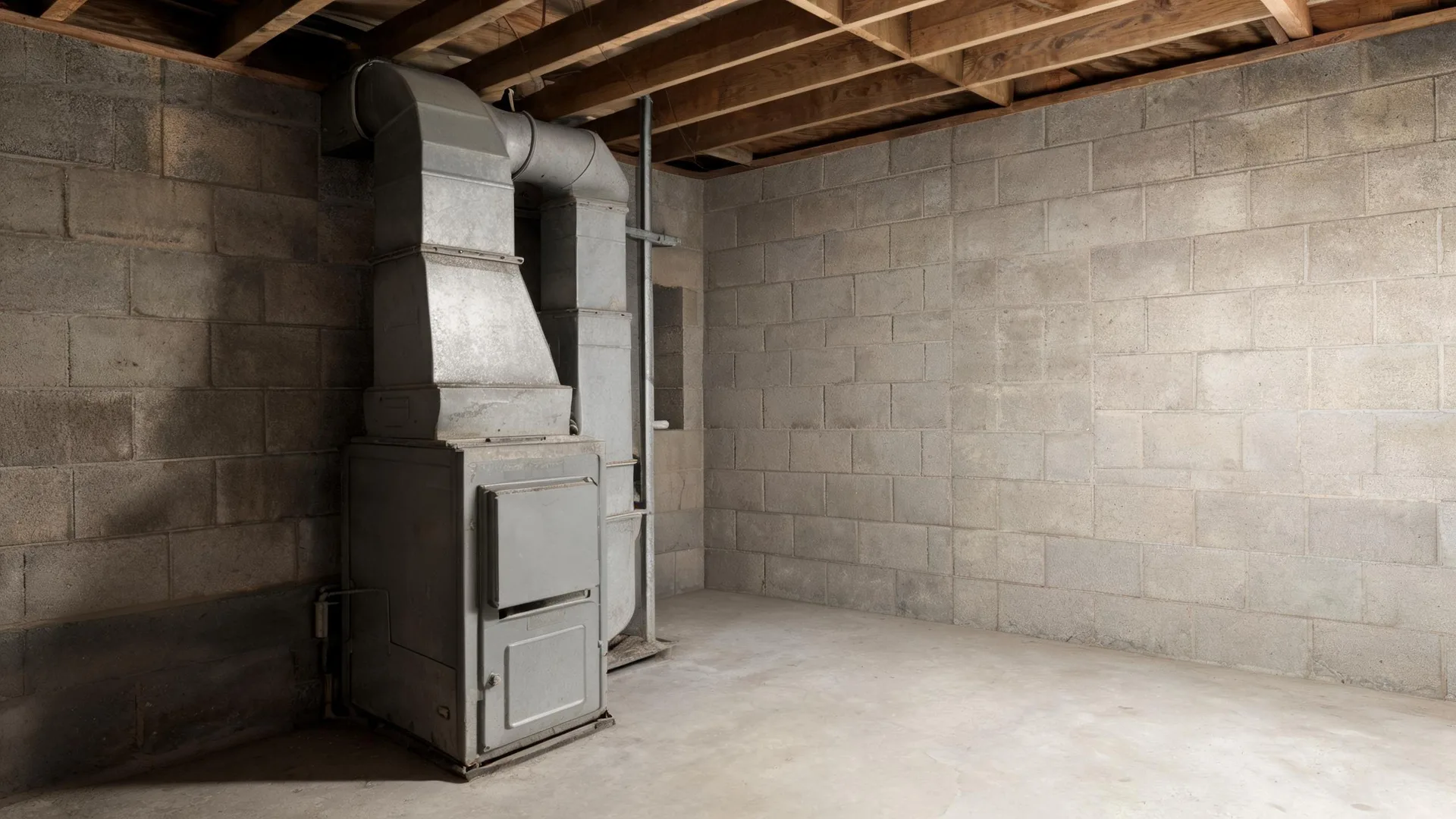
Whoever installs the new furnace will disconnect the old one from the gas line and the vent and pull it out. If it's a forced air system, the ductwork stays and connects to the new unit, so whoever is doing the work should check it over while it's exposed. Old ducts can have gaps, crushed sections or the wrong size for the new furnace's airflow, and this is the easiest point in the whole job to fix any of that. The old thermostat usually gets replaced too, since a new furnace often needs different wiring or settings than the old control allowed for. Some installers hold the old unit for scrap because of the metal and copper in it, so ask before assuming you need to deal with hauling it off yourself.

The percentage is fuel use, not comfort

The efficiency rating tells you how much of the gas burned becomes heat in the house, and how much goes out the flue. It says nothing about how evenly that heat spreads through the rooms, how quiet the burner is, or how the system handles a bitter cold night. Two furnaces at the same rating can still feel different to live with, because that number only measures the one thing.

The rating only holds if the rest of the system matches it

A high efficiency furnace needs ductwork sized to move the air it produces and a venting setup built for how that model exhausts. Put a highly rated furnace on ducts or vent pipe meant for an older, lower rated one, and it won't deliver what the label promises. Whoever installs it has to size the whole system around the furnace, not just set the furnace down and connect what's already there.

Comparing furnaces on price alone misses most of what makes one install better than another. Ask what the input and output capacity is, since a furnace sized too big for the house will short cycle and one sized too small will run constantly and still fall short on the coldest nights. Ask what stage of heat it offers. A single stage furnace is on full blast or off, a two stage unit can run at a lower setting most of the time, and a modulating furnace adjusts its output in small steps to match what the house actually needs at that moment. Ask what the blower motor is, because a variable speed motor uses less power and holds a steadier temperature than one that only runs at a fixed speed. Ask about the warranty on the heat exchanger specifically, not just the unit as a whole, since that part is the most expensive thing to replace if it fails. And ask what sound rating the furnace carries, since a unit sitting near a bedroom or living space matters more day to day than the spec sheet suggests.

Install day starts with a load calculation walkthrough if one hasn't already been done, since the new furnace gets sized to the house, not swapped in to match the old one. The crew clears the area around the furnace, shuts off gas and power to the old unit, and disconnects it from the ductwork, gas line and vent before it comes out. Setting the new furnace is the fast part. Most of the day goes into connecting gas, wiring the control board, sealing the duct connections, and running vent pipe to code. Once it's in place, a tech fires it up and checks the flame, the temperature rise across the heat exchanger, and the airflow at the registers before calling the job done. The thermostat gets programmed last, after the system has run through at least one full cycle.