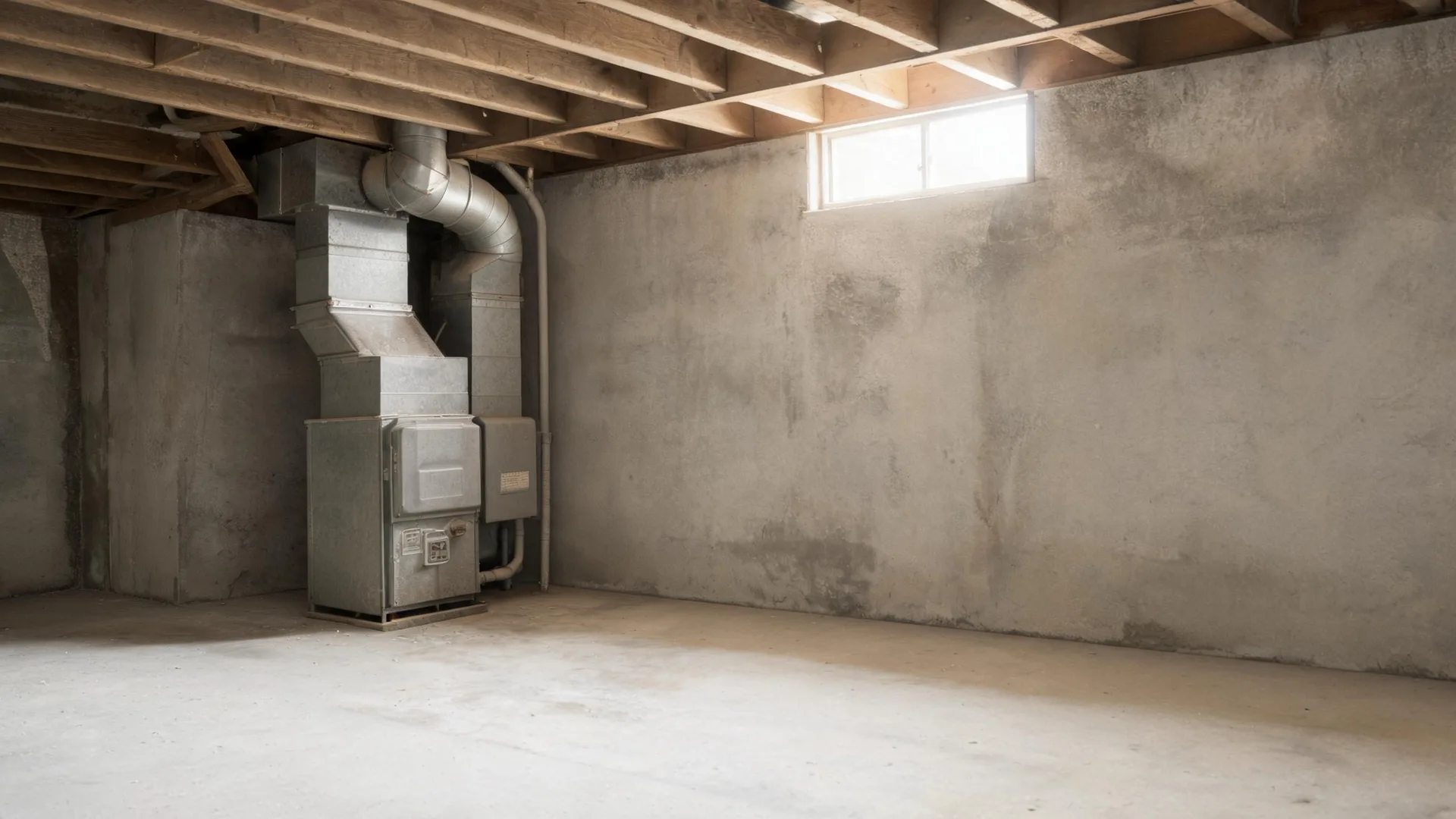
Storms come through this county often
St. Charles County recorded 141 severe weather events between 2015 and 2024. That includes 84 damaging wind events, 39 hail storms, 9 tornadoes and 9 winter storms with heavy snow or ice.
Takes about a minute. No obligation.
St. Charles County recorded 141 severe weather events between 2015 and 2024. That includes 84 damaging wind events, 39 hail storms, 9 tornadoes and 9 winter storms with heavy snow or ice.
Close to a fifth of Missouri households went at least 24 hours without power in 2024. A furnace with no power won't run, and neither will most water heaters, so an installation here has to account for that.
NOAA nClimDiv, 1991–2020 normals
Furnaces here start running in October.
September is the month to get a new one in, before the first cold night makes the decision for you.
St. Charles County falls under zone 4A, and any furnace installed here has to meet the efficiency rules that come with it. Furnaces built from November 2015 on already have to turn at least 80 percent of their gas into heat over the winter. That floor goes up to 95 percent for furnaces built from December 2028 on, so the baseline itself is about to change. A furnace meeting the higher mark wastes less gas doing the same job, which matters across a winter that runs cold here. A federal tax credit is available on qualifying high-efficiency furnaces, worth checking against whatever unit you're considering before you decide.
A new furnace is a chance to decide where it sits and what backs it up before a storm takes the power out, not after. Ask what happens to heat and hot water when the power drops, and whether a transfer switch or backup power makes sense for this installation.
Find a contractorA furnace that's too big for the house will short cycle. It heats the space fast, shuts off, then starts again a few minutes later because it never ran long enough to pull the chill out of the walls and floors. That start-stop pattern wears on the ignition system and the blower motor, and it leaves rooms feeling uneven, warm near the vent and cold in the corners. Oversizing doesn't mean more comfort. It means more cycling and more wear. A furnace that's too small runs the opposite problem. It can't keep up on the coldest nights, so it runs constantly and still loses ground, pushing the heat exchanger harder than it was built to work for hours at a stretch. Getting the size right starts with a load calculation, not a guess based on the old unit or the size of the house alone. That calculation accounts for the windows, the insulation, the ceiling height, the layout, how the ductwork moves air through the place. Two homes the same size can need different furnaces because one holds heat better than the other. A furnace sized off the load calculation runs long, steady cycles that bring the house up to temperature and hold it there, which is what the equipment is built to do.
The efficiency rating on the label tells you how much of the gas burned turns into heat in the house versus how much goes out the flue. It says nothing about how evenly the furnace heats the rooms, how quiet it runs, or how long it lasts. A higher-rated furnace can still be the wrong size or the wrong fit for the ductwork it's paired with.
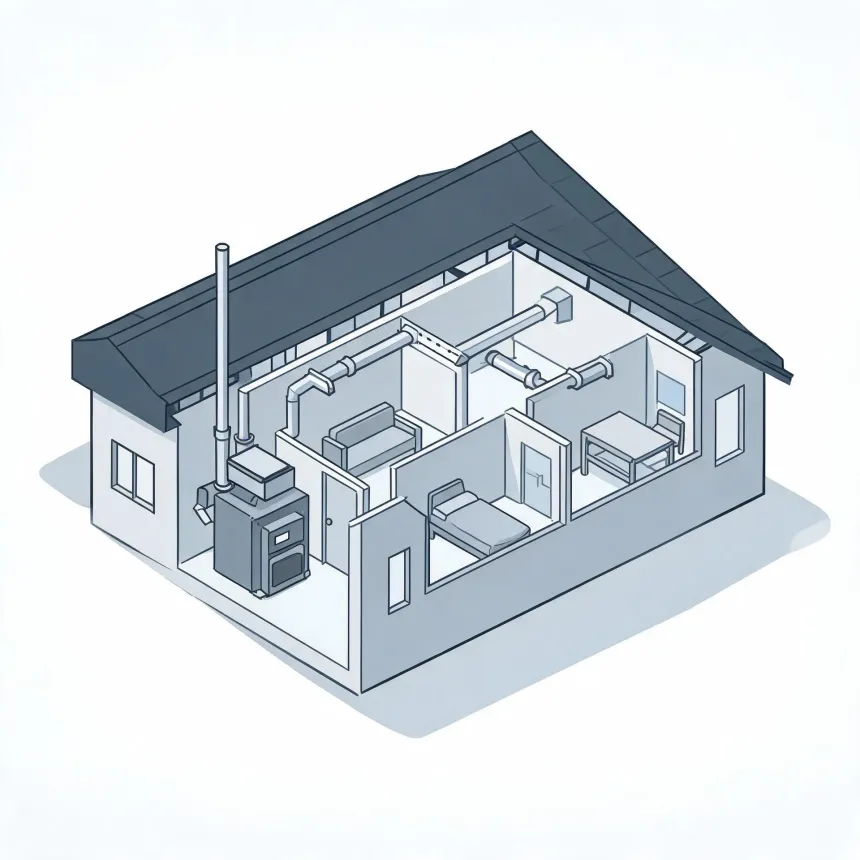
Furnaces that hit the higher efficiency marks do it with a second heat exchanger and a different venting setup, pulling more heat out of the exhaust before it leaves the house. That means venting through PVC pipe instead of a metal flue, and a condensate line to carry off the moisture that gets pulled out of the exhaust. Whoever installs it needs a plan for both before the furnace goes in, not after.
Estimates for a typical St. Charles County home, from EIA household energy data, Missouri fuel prices and NOAA climate normals. Your home will differ.
Most homes in St. Charles County heat with gas, 65.9 percent of them. Another 29.9 percent use electricity, and a small share runs on bottled or LP gas. That split is why gas furnaces are the common replacement here, not the exception. Parts, venting, gas lines, the people who service them, all built around the fuel most of the county already has. Switching a home over to electric heat means new wiring and a different kind of system entirely, a bigger job than most people are looking to take on. If the house already runs on gas, installing another gas furnace is the straightforward path.