






Three lit brick homes on a tree-lined residential street photographed at dusk.

Furnace Installation in Marshfield, MO

Tell us about the job

Takes about a minute. No obligation.

New system or replacementFurnace or heatingWebster County, MO
Step 1 of 2

What ZIP code is the job in?

Missouri homes paid $37.84 per million Btu for electricity in 2024. That is the number a furnace runs against every day it is working. A unit that wastes heat burns through more of that expensive power to hit the same temperature in your house, month after month. The efficiency rating on a new furnace is not a sticker detail, it is what decides how hard it has to work against that price. Ask what AFUE rating any system you're considering actually carries, and have it explained in plain terms before you decide.

7 months
October through April, your furnace is on duty
25°F
the average winter night it heats against
80% AFUE
the federal minimum any new unit must meet
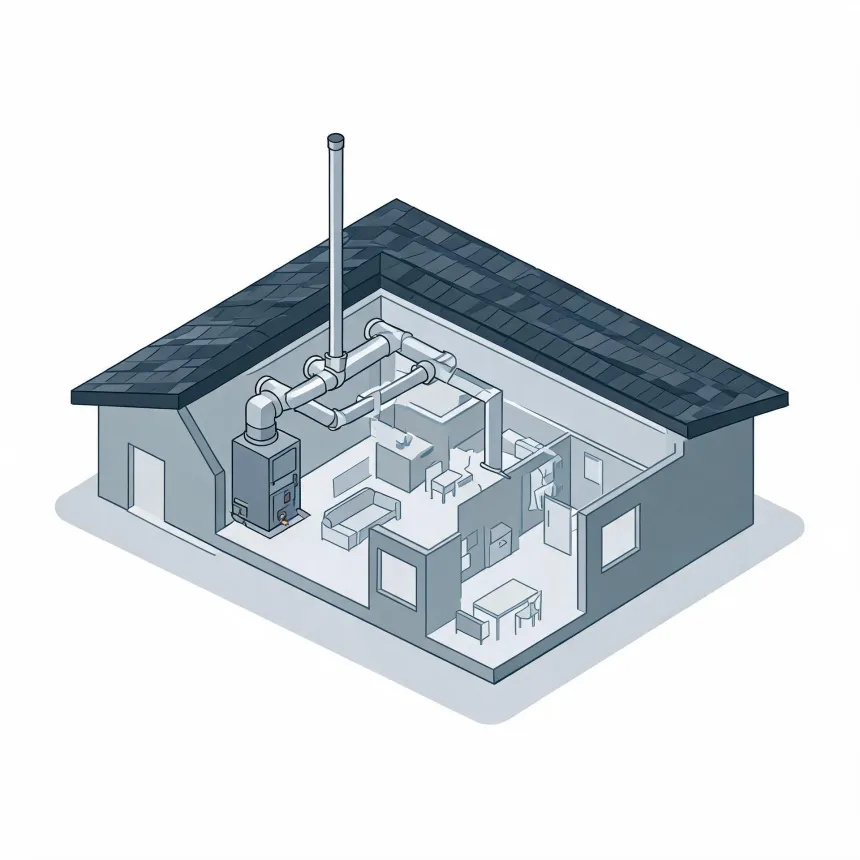
Isometric cutaway illustration of a single-story house showing interior rooms with furniture, a furnace unit with connected ductwork and a tall vertical flue pipe extending above the dark shingled roof.
Your furnace works hardest from November through March.

NOAA nClimDiv, 1991–2020 normals

Webster County had 190 severe weather events between 2015 and 2024.

A furnace installed here needs venting and a flue that hold up to what this county's weather actually does.

Most homes in Webster County heat with electricity, so that's the straightforward match for a new furnace

42.2% of homes heat with electricity
Heat runs October through April
Winter nights average 25°F
Built for what hits this county190 severe weather events hit this county between 2015 and 2024, so the vent and flue have to hold up, not just the furnace

A higher AFUE rating means less of that $37.84 per million Btu goes out the flue unused. Two furnaces can heat the same house to the same temperature and still cost different amounts to run, because one holds onto more of the heat it makes. When quotes come in, put the AFUE rating next to the price on each one. A lower price up front can still lose to a more efficient unit once a winter of bills is added in.

Get it done in September, before heat season starts in October

Heat starts here in October. If the furnace is going in before then, September is the month to get it done, while there's no rush and no cold house waiting on the work.

Find a contractor
A man in a dark T-shirt and tan work pants, seen from behind, climbs porch steps toward a blue front door while carrying a canvas tool bag filled with hand tools.
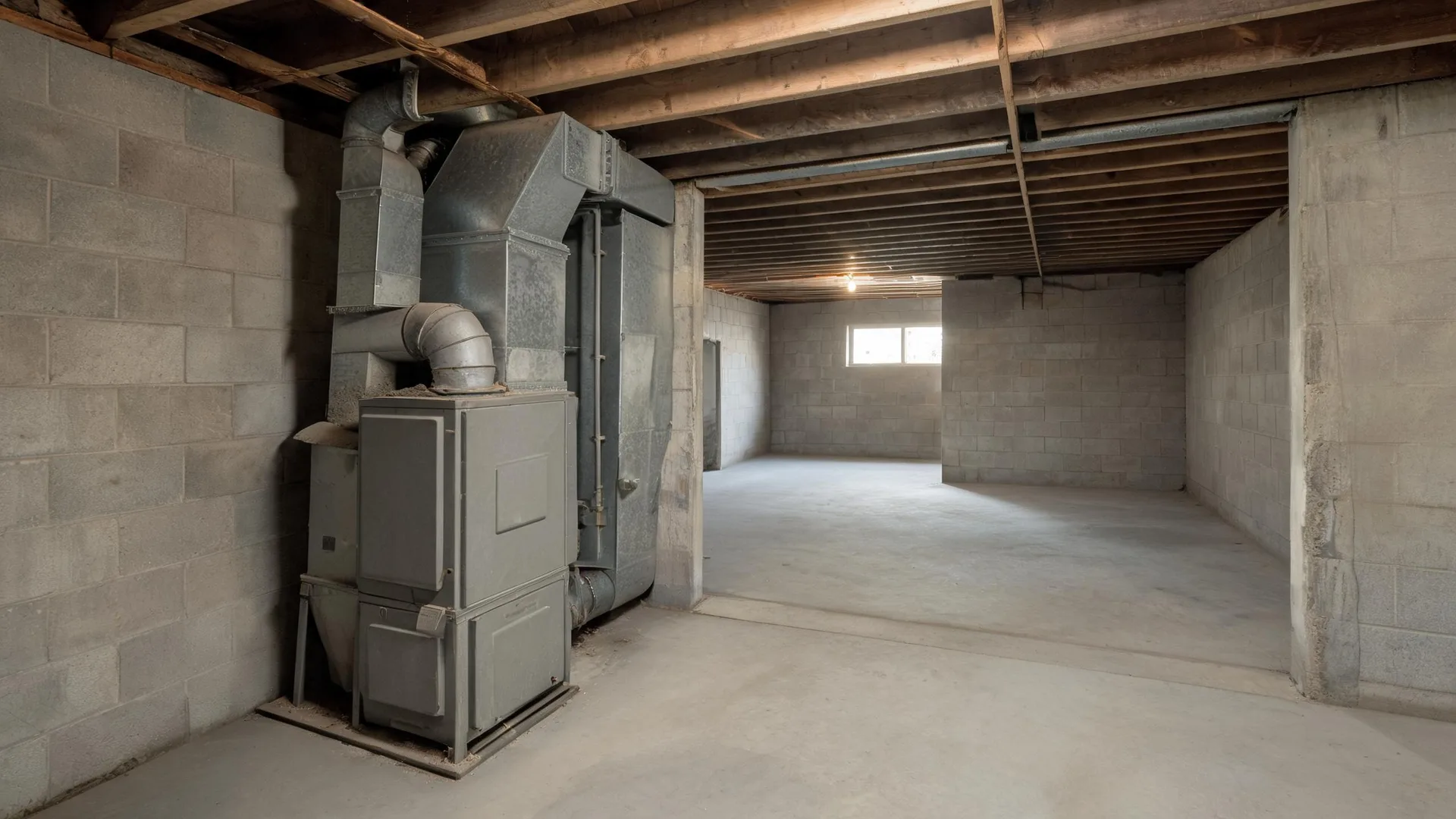
A gray residential gas furnace installed in an unfinished basement, connected to sheet-metal ductwork and PVC pipes.

Sized to the house, not swapped in for the old one

A furnace that's too big for the house doesn't heat it any faster in a way that helps. It hits the thermostat's setpoint quick, shuts off, then starts again a short time later, over and over through the day. That short cycling is hard on the parts that see the most stress at startup, the igniter and the heat exchanger, and it wears them down well before their time. A furnace that's too small just can't keep up when it's cold out, so it runs long stretches without ever quite catching up to the thermostat. Getting the size right means a contractor works out a heat load calculation for the house, room by room, counting windows, insulation and square footage rather than going off the size of the old unit or a rule of thumb. The furnace that comes out of that math is the one that runs in long, steady cycles, warms the house evenly, and lasts out its full years of service.

Ask what the warranty actually covers

A furnace warranty usually splits into parts and labor, and they don't run the same length. The manufacturer backs the heat exchanger and other parts for a set number of years, but labor to pull a failed part and put in a new one is often a separate, shorter term, and sometimes it's not included at all unless the installer adds it. Ask for both terms, not just one, and ask who you call when something fails down the road.
Ask how they'll vent it

A furnace's AFUE rating changes what venting it needs. Higher-efficiency furnaces cool the exhaust enough that it has to leave through PVC pipe rather than a metal flue, often straight out a side wall instead of up through the roof. That changes where the pipe can run and where it ends up outside. Ask where the vent will exit and whether that means new pipe through the wall, not just a reuse of what's already there.

What drives the price of a furnace installation is mostly what has to change beyond the furnace itself. Swapping one unit for another in the same spot, same vent, same ductwork, same gas line, costs less than a job where any of those have to move. Ductwork that's undersized for the new furnace needs rework, or the furnace won't deliver what it's rated for no matter how good it is. The vent is its own question, since a higher-efficiency furnace often needs different venting than what's already there, and running new pipe costs more than reusing a flue that already fits. Higher AFUE units also carry a higher purchase price before any labor is counted, so the rating you choose sets part of the number before a contractor ever picks up a tool. Permits and inspection are part of the job too, not an add-on, because a furnace isn't legally installed without them.

Installation day starts with the old furnace coming out, not the new one going in. The contractor shuts off gas and power first, then disconnects the vent and ductwork before anything is unhooked. Once the old unit is clear, they check the opening it leaves behind against the new furnace's footprint, since even same-size replacements rarely line up to the inch. Setting the new furnace means leveling it, connecting the ductwork, running the gas line, and wiring it to the thermostat, then venting it according to its AFUE rating. Before anyone leaves, the furnace gets fired up and run through a full cycle so the technician can check the flame, the airflow, and the temperature rise against what the manufacturer specifies. A combustion analyzer test and a check of the vent draft usually close out the job, confirming the furnace is burning clean and venting the way it should before the inspection is called in.