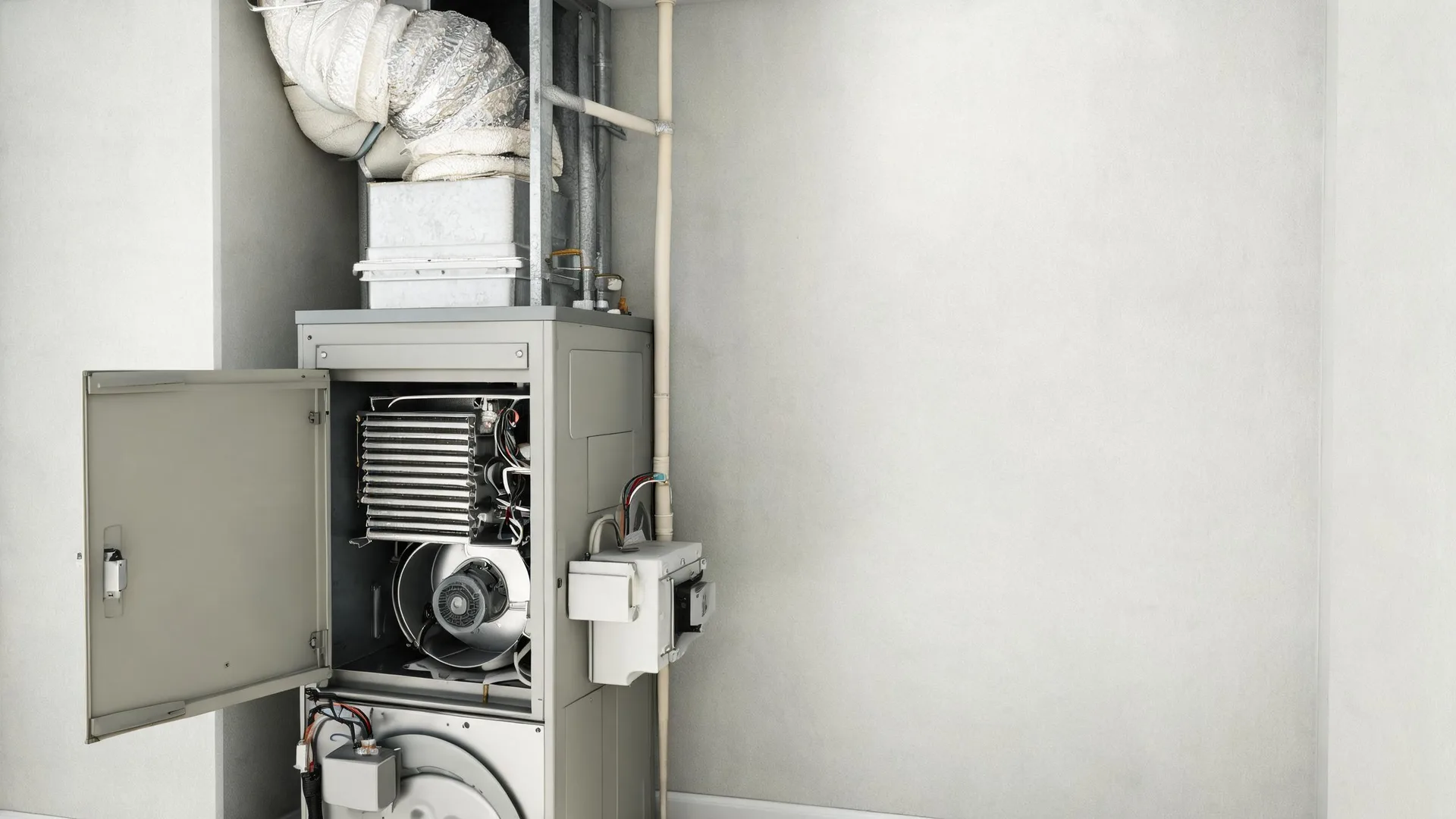
Weather here takes a toll on equipment
Clay County recorded 227 severe weather events between 2015 and 2024, including 116 damaging wind events, 94 hail events, and 6 tornadoes. An outdoor unit sits outside through all of it, year after year.
Takes about a minute. No obligation.
Clay County recorded 227 severe weather events between 2015 and 2024, including 116 damaging wind events, 94 hail events, and 6 tornadoes. An outdoor unit sits outside through all of it, year after year.
Nearly one in five Missouri households went at least 24 hours without power in 2024. A furnace needs electricity to run even when the fuel is gas, so an outage can mean no heat on top of no lights.
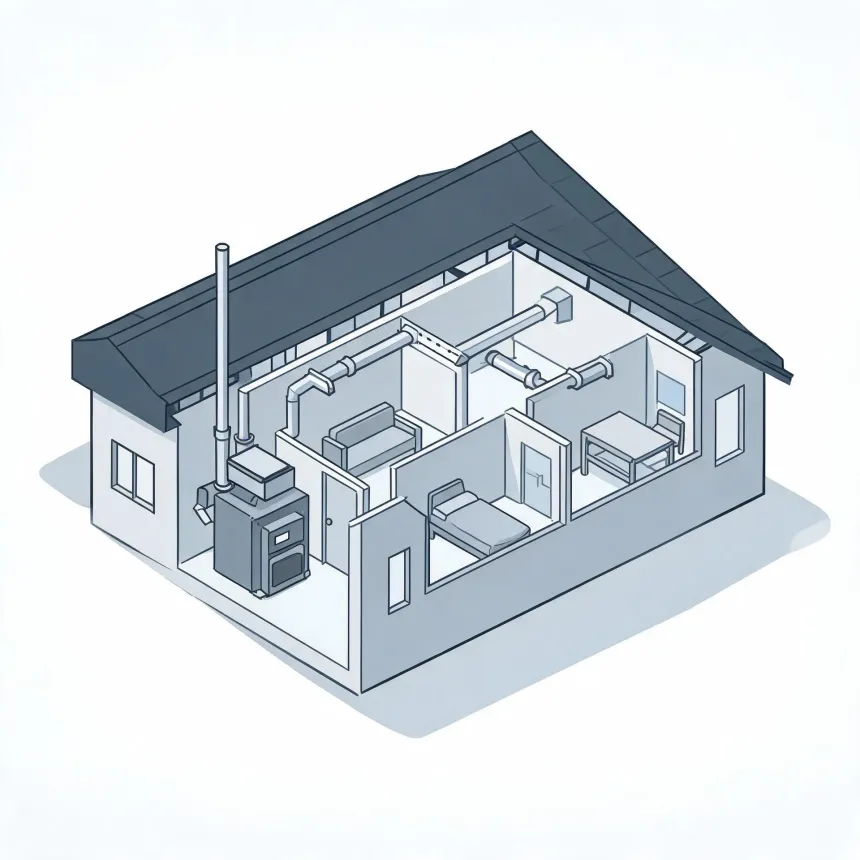
NOAA nClimDiv, 1991–2020 normals
Furnaces here start running in October.
Get the new one in during September and it's already broken in before the cold hits.



Clay County falls under zone 4A, a mixed climate that asks a furnace to work for its keep in both directions. Any indoor gas furnace installed here has to turn at least 80 percent of the gas it burns into heat over the winter, the federal minimum for units built since November 2015. That floor goes up to 95 percent for furnaces manufactured starting December 18, 2028, so the baseline efficiency a contractor can sell you is already set to change. A federal tax credit is available on qualifying high-efficiency furnaces, worth checking into when comparing models. The efficiency rating on the unit tells you how much of what you pay for actually becomes heat in the house, which matters more somewhere that runs a furnace hard for months at a time.
Ask about a battery or generator option when you're comparing installs, something that keeps the furnace's igniter and blower running if the power drops. Where the outdoor unit goes matters too, clear of falling branches and where hail won't catch it straight on. Worth settling before the new system goes in, not after.
Find a contractorA furnace that's too big for the house will short cycle. It fires up, blasts the house to temperature in a few minutes, then shuts off before it's finished the cycle a furnace is built to run. That means the heat exchanger never gets to steady operation, the blower never moves air long enough to even things out room to room, and the burner is kicking on and off far more than it should. All that cycling wears on the ignition system and the blower motor faster than steady runtime does. Too small, and the furnace runs nearly nonstop on the coldest days, straining to keep up and never quite reaching the thermostat setting. The right size comes from a load calculation, a room by room look at square footage, window area, insulation and ceiling height, not a guess based on the old unit or a flat rule like bigger square footage means a bigger furnace. A contractor worth hiring will run that calculation before quoting a size, not after.
An efficiency rating tells you how much of the fuel burned turns into heat that reaches the house, and how much goes out the flue. A furnace rated higher wrings more heat out of the same gas. It says nothing about whether the unit is the right size for the house, which is a separate question with its own answer.
A furnace with a higher rating keeps that advantage every time it fires, all winter, not just on the coldest days. Over a full heating season that difference adds up, since the furnace cycles on and off thousands of times between fall and spring, and every one of those cycles burns a little less fuel for the same heat.
Estimates for a typical Clay County home, from EIA household energy data, Missouri fuel prices and NOAA climate normals. Your home will differ.
Installation day starts with the old furnace coming out, along with the flue pipe and any ductwork that doesn't match up with the new unit. The contractor sets the new furnace, connects the gas line, the vent, and the return and supply plenums, then wires it to the thermostat and the blower. Once it's in place, a combustion analyzer checks the exhaust to confirm the burner is tuned right, not running rich or starving for air. Static pressure gets tested in the ductwork too, since a furnace pushing against too much resistance will wear out well before its time. The last step is a run cycle through each stage of heat, checking the temperature rise against what the manufacturer specifies for that model. A contractor who skips that last check is leaving the most important question unanswered.