




A low ground-level view across a mown lawn toward a dark two-story house with a covered front porch, flanked by large leafy trees under an overcast sky.

Furnace Installation in Joplin, MO

Tell us about the job

Takes about a minute. No obligation.

New system or replacementFurnace or heatingJasper County, MO
Step 1 of 2

What ZIP code is the job in?

Jasper County saw 232 severe weather events between 2015 and 2024. Most of that was wind and hail, 124 damaging wind events and 82 hail events, with 9 tornadoes and 9 winter storms mixed in. A furnace doesn't sit outside like an AC condenser does, but it still depends on the power staying on, and storms here take that down more than they do elsewhere. Statewide, 19% of households went at least a full day without power in 2024. For a house that heats with electricity, that's a day with no furnace running, not just a flickering light.

7 months
October through April, your furnace is on duty
27°F
the average winter night it heats against
80% AFUE
the federal minimum any new unit must meet
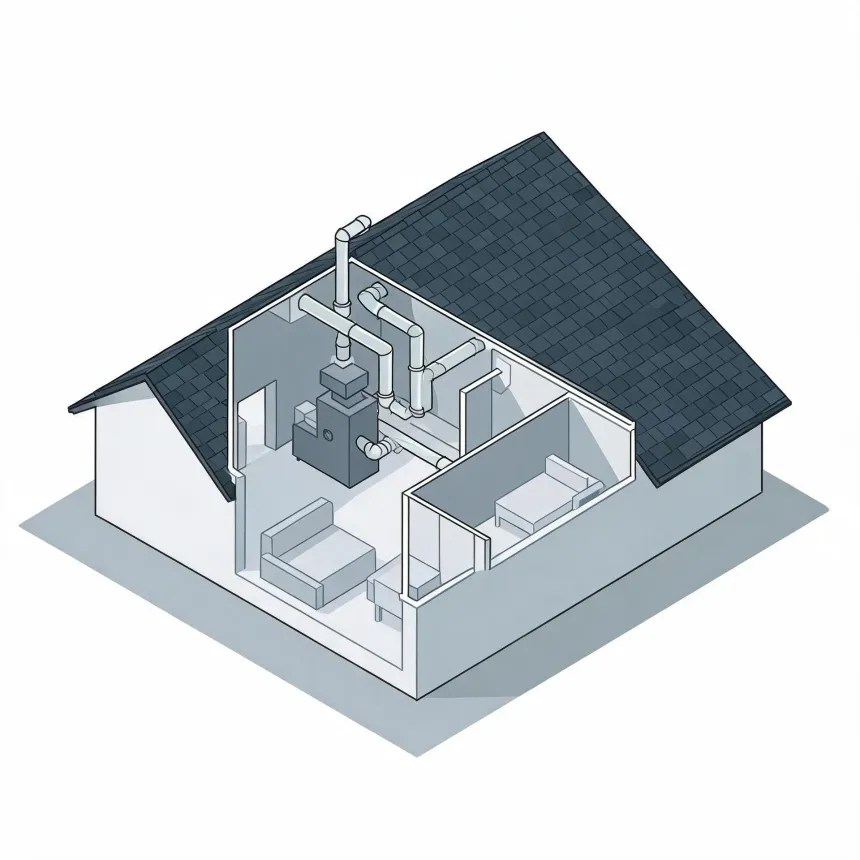
Isometric cutaway illustration of a single-story house with a dark shingled roof, showing interior rooms with furniture and a furnace connected to ductwork.
Your furnace works hardest from November through March.

NOAA nClimDiv, 1991–2020 normals

A furnace with no battery backup or generator hookup stops cold the moment power drops, even if the gas valve and burners are fine.

Ask what each system needs to restart on its own when power comes back, because some need a hand and some don't.

Seven months of heat depend on power that doesn't always stay on

Heat runs October through April
Winter nights average 27°F
Climate zone 4A
Most Furnaces Here Run on Electricity47.9% of homes here heat with electricity, more than any other fuel

Jasper County falls under climate zone 4A, which asks a furnace to work in both real cold and real humidity. Any furnace installed here has to turn at least 80 percent of the gas it burns into heat over the winter, which has been the federal floor since late 2015. That number jumps to 95 percent for furnaces built on or after December 18, 2028, so what's allowed on the market is already set to change. A homeowner installing now still gets a legal choice between the two standards until that date hits. Either way, the unit going into your house has to clear the bar that's current when it's manufactured, not when it's installed.

Plan for the outage before you need it

When the power goes out here, it tends to stay out longer than a few minutes. If your furnace runs on electricity, that means no heat until it's back. Ask about a battery backup or a generator hookup before the new system goes in, not after.

Find a contractor
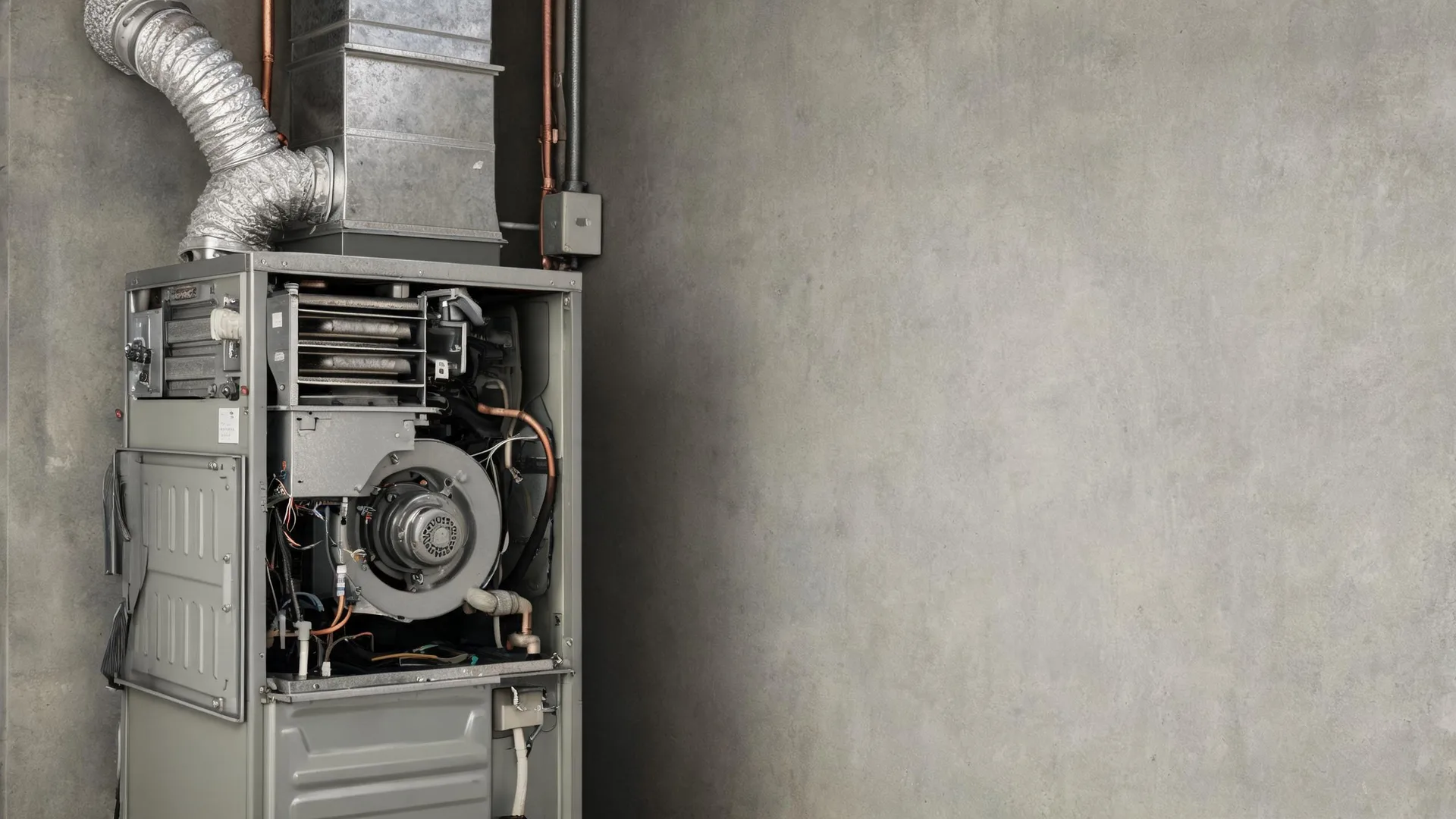
A gray residential gas furnace installed in an unfinished basement, connected to sheet-metal ductwork and PVC pipes.

The old furnace doesn't just get swapped, it gets sized out

Pull the old furnace out and the installer usually finds a few things worth knowing. The heat exchanger might have hairline cracks you couldn't have seen without taking it apart, which means it was pushing exhaust where it shouldn't have gone. The ductwork underneath often needs sealing or resizing once the new unit goes in, because a furnace sized for the house today isn't always matched to what was installed decades ago. Old furnaces get hauled off for scrap, mostly the sheet metal and the copper in the wiring. None of that reuse matters to how the new system runs. What matters is that the new furnace gets matched to the house it's going into, not just dropped in where the old one sat.

The house decides the size

A furnace gets sized to how fast the house loses heat, not to the size of the furnace that's coming out. An installer works out the heat loss room by room, counting windows, ceiling height and what's between the living space and the outside. Too big and the furnace short cycles, heating the air fast and shutting off before the house actually warms through. Too small and it runs constantly without catching up on the coldest days. Either mistake costs more than the sizing study would have.
The ductwork has to match the new furnace

A furnace moves a certain volume of air, and the ducts have to be able to carry it. Old ductwork sized for an old furnace can choke a new one, or let a bigger one push air too fast and whistle through the vents. Some jobs need a duct resized or a return added before the new furnace can breathe right. That work happens during install, not after someone notices a room that never warms up.

Sizing a furnace starts with a heat loss calculation, not a guess based on square footage. The installer works out how fast each room loses heat through its walls, windows and ceiling, then adds those numbers up for the whole house. That total tells them what size furnace actually matches the house, not what size fits the budget or what the old unit happened to be. A furnace that's too big will satisfy the thermostat fast and shut off before the heat has worked its way through the rooms farthest from the register. That short cycling wears on the ignition system and the blower motor because they're starting and stopping far more than they're built for. A furnace that's too small just runs and runs on the coldest days, never quite catching up, which strains the heat exchanger over time. The right size runs long steady cycles that actually heat the house evenly, and that's the whole goal of the calculation.

Installation day starts with the old furnace coming out, and the house goes without heat until the new one is set and running. The installer sets the new furnace, usually in the same spot unless the venting or the ductwork calls for a change, and connects the gas line, the flue or vent pipe, the return and supply ducts, and the electrical. Every joint on the gas line gets tested for leaks before anything is fired up. The flue gets checked too, since a furnace venting incorrectly can push exhaust back into the house instead of outside. Once it's hooked up, the installer fires the furnace and runs it through a full cycle, checking the flame, the temperature rise across the heat exchanger, and the airflow at the registers. The thermostat gets wired in and tested last, and the installer should walk through what the furnace needs to restart on its own if it ever loses power.