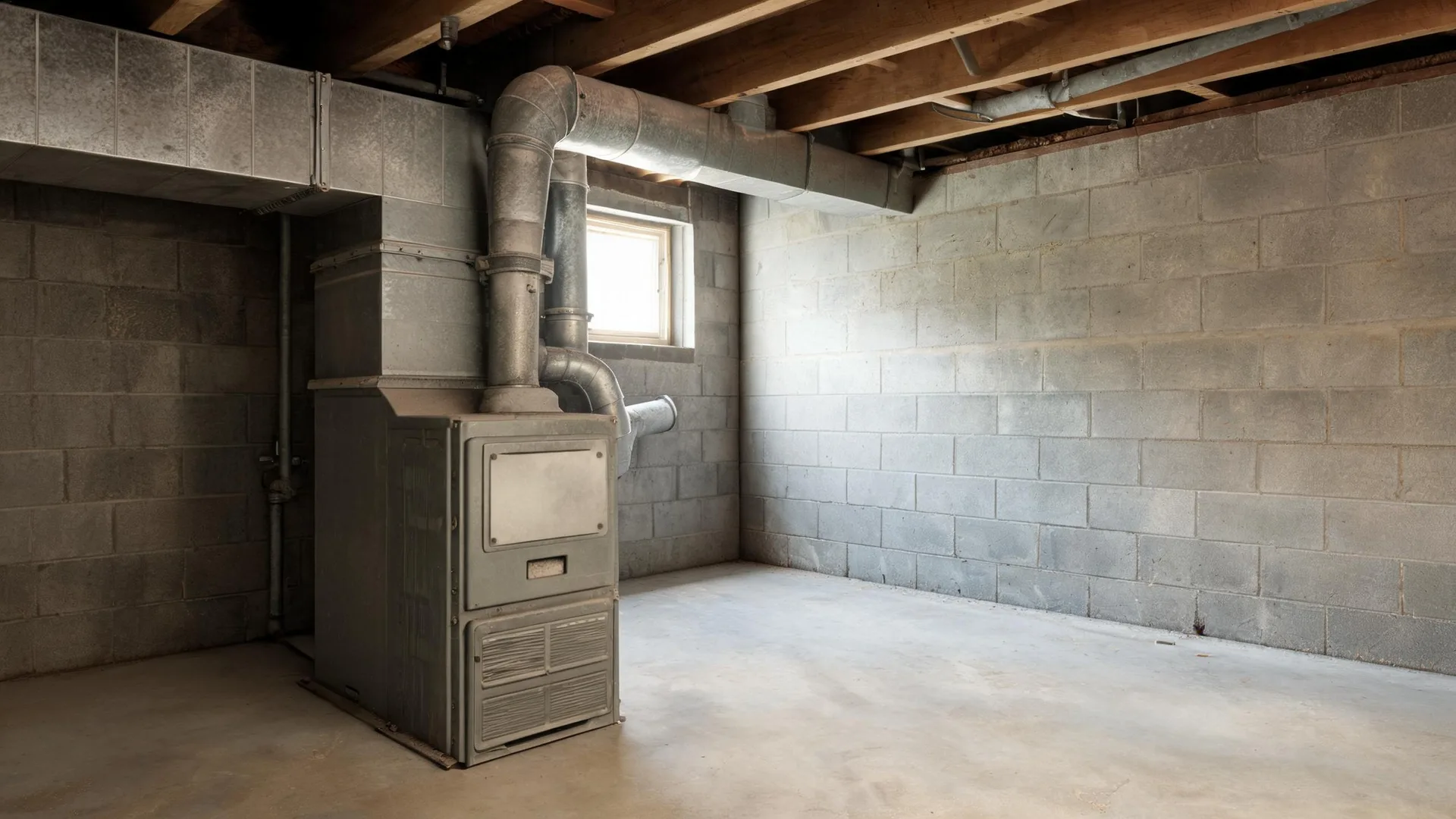
Gas is the normal choice here
Utility gas heats 55.2% of homes in Marion County, more than electric and propane combined. A gas furnace is what most contractors here install and service most often.
Takes about a minute. No obligation.
Utility gas heats 55.2% of homes in Marion County, more than electric and propane combined. A gas furnace is what most contractors here install and service most often.
If your home already has a gas line run to a furnace, replacing it with another gas furnace is usually the straightforward path. Switching fuel types is a bigger job, since it can mean new gas line work or electrical work that a like-for-like swap does not need.
NOAA nClimDiv, 1991–2020 normals
Gas in Missouri ran $16.49 per million Btu in 2024.
A standard furnace sized to your home will heat it without paying for capacity you don't need.



Heat runs here from October through April, seven months out of the year. September is the window before that starts. A furnace that waits until the first cold morning to get replaced gets replaced in a hurry, on whatever the contractor's schedule allows that week. One that goes in during September gets sized right, installed without rushing, and tested before it has to carry the house through a long stretch of cold. By the time October comes, it's already doing the job instead of just getting started on it.
Half the homes in Marion County were built in 1971 or earlier. A furnace going into a house that age has to work with the ductwork and gas line that are already there, not a blank slate. Sizing it to the house, not just dropping in the same tonnage as before, is what makes it fit.
Find a contractorAsk the contractor for a load calculation before they quote a tonnage. It takes into account the ductwork already running through your walls and floors, not just the square footage of the house. If your ducts were sized for a furnace installed decades ago, that's what the new one has to work with, so get that checked before the install date, not during it.
The number on the label is the share of fuel that turns into heat for the house. What's left goes out the flue. A higher number means less of what you're paying for leaves through the vent, but it doesn't tell you what gas costs or how much your house needs to stay warm. Furnaces with the same rating can still cost different amounts to run if one is sized wrong for the house.
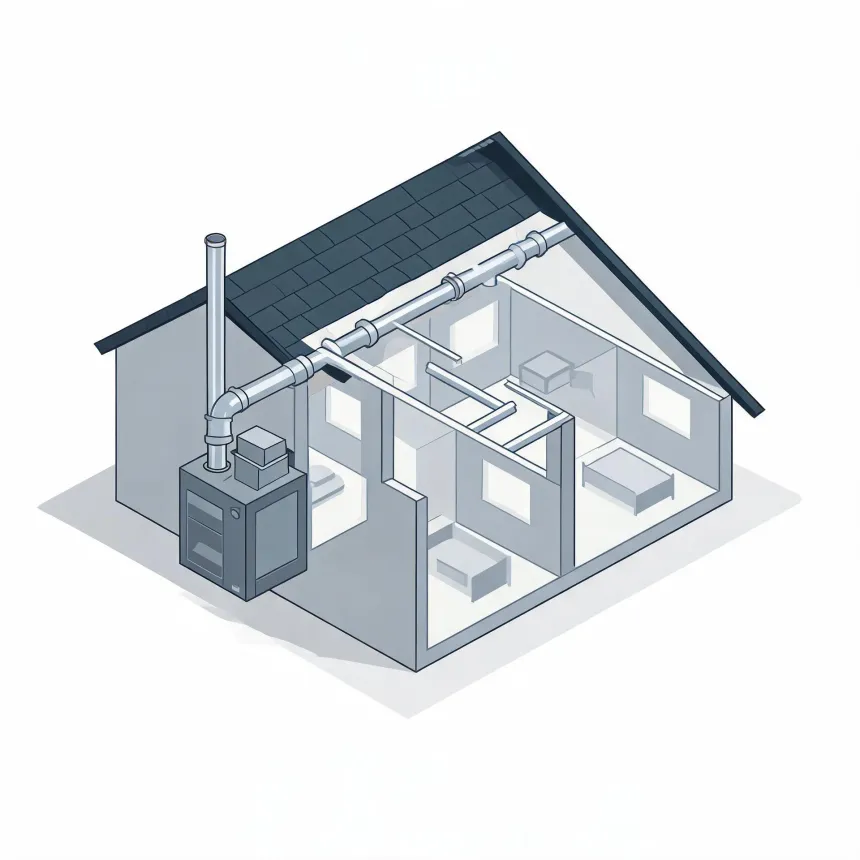
A furnace earns its rating on a test bench, with the duct and venting it was built for. Put it on a duct system that restricts airflow and it won't hit that number in the house, no matter what the sticker says. Ask the contractor how the furnace is meant to vent, through a chimney or straight out the side wall, since that changes what the install needs to get right.
Estimates for a typical Marion County home, from EIA household energy data, Missouri fuel prices and NOAA climate normals. Your home will differ.
The old furnace comes out first, and that part is usually quick. What takes the time is everything around it. The gas line gets checked for the right pressure before the new unit ever connects to it. The vent gets matched to the furnace, since a unit that vents out the side wall doesn't tie into a chimney built for the old one. The ductwork gets connected to the plenum, sealed at every joint, because a loose seam there leaks the air you just paid to heat. Once it's wired up and the gas is on, the contractor runs it through a full cycle, checking the flame, the temperature rise, the airflow at the vents, before calling it done. None of that shows up on the invoice, but it's the difference between a furnace that hits its rating and one that just has the sticker.