





An unfinished basement containing a gas furnace with ductwork in the foreground and miscellaneous stored items along the far concrete wall.

Furnace Installation in Columbia, MO

Tell us about the job

Takes about a minute. No obligation.

New system or replacementFurnace or heatingBoone County, MO
Step 1 of 2

What ZIP code is the job in?

Gas heats more homes in Boone County than any other fuel, at 48.2%. Electricity comes next at 43.5%, and a smaller share run on propane. If your house already has a gas line run to it, replacing the furnace with another gas model is usually the straightforward choice. The new unit connects to the same gas line, the same vent, the same ductwork. Switching fuel types on an install means running new gas line or new electrical circuits, so staying with what you have keeps the job simpler.

7 months
October through April, your furnace is on duty
24°F
the average winter night it heats against
80% AFUE
the federal minimum any new unit must meet
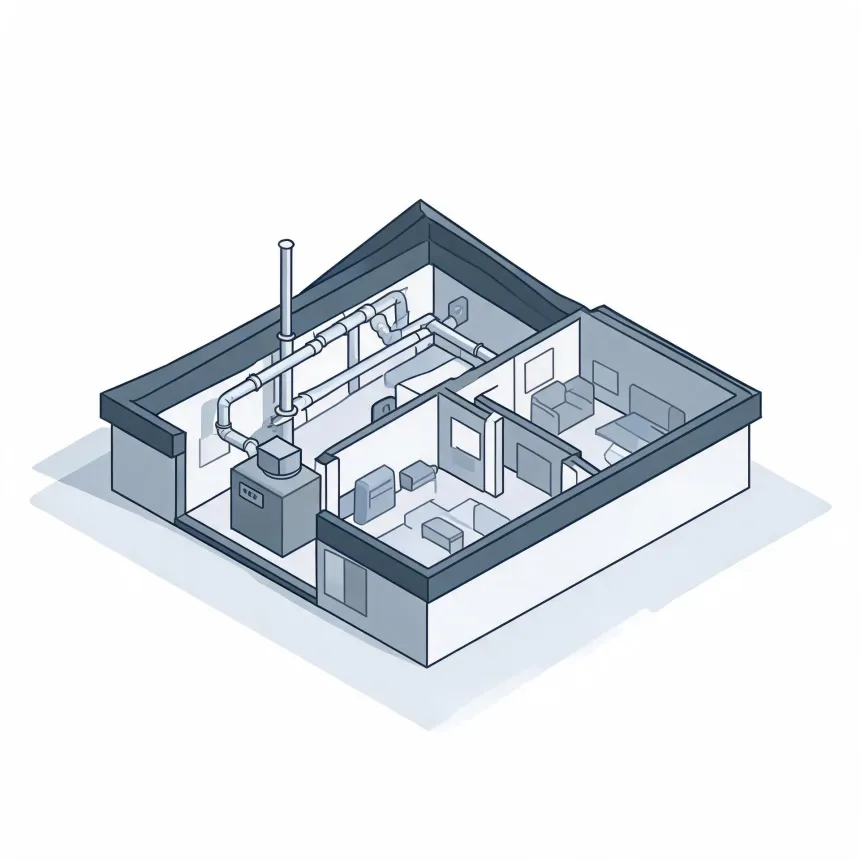
Isometric line illustration of a cutaway building interior showing a furnace unit with a flue pipe and ductwork running along the ceiling, plus adjacent rooms with simplified furniture.
Your furnace works hardest from November through March.

NOAA nClimDiv, 1991–2020 normals

Winter lows here average 24°F, seven months of heating a year.

A correctly sized standard furnace handles that without needing to be oversized or upgraded.

September is your window before seven months of heat begin

Heat runs October through April
Winter nights average 24°F
Climate zone 4A

The size of the furnace matters more than the brand. A unit too big for the house cycles on and off fast, which wears the heat exchanger and leaves rooms uneven. A unit too small runs constantly and still can't keep up on the coldest days. Getting the size right means a load calculation on the house itself, not just swapping in whatever matches the old nameplate. Ductwork plays into the cost too. Ducts sized for the old furnace's airflow may need adjusting to match a new one, especially if the new unit has a different blower. Venting is its own question. A high-efficiency furnace vents differently than a standard one, so changing efficiency tiers often means new venting, not just a new unit dropped into the old spot.

The right size furnace, not the biggest one

A standard furnace at the right size is built to run through a Missouri winter on Missouri gas prices, no upgrade needed. The work is matching the furnace to this house, not finding a bigger or pricier one than what the job calls for.

Find a contractor
A man in a dark long-sleeve shirt and tan pants climbs porch steps toward a blue front door, carrying a worn canvas tool bag with tools in its side pockets, beside a potted shrub in a blue planter.
A gas furnace with attached ductwork, gas piping, and condensate lines installed in a concrete-block basement.

Ask about the stage and the AFUE, not just the brand

Ask about the stage of the burner, not just the brand. A single-stage furnace is either on full blast or off. A modulating or multi-stage furnace spends most of its time running low and steady, which holds the house at a more even temperature and puts less wear on the heat exchanger over the years. Ask about the blower motor too. A variable-speed blower adjusts its airflow to match what the burner is doing. A fixed-speed motor just runs at one speed whenever it kicks on. Ask about the AFUE rating as well. It tells you how much of the gas burning turns into heat in the house instead of going out the vent. None of this matters if the furnace isn't sized to the house first. Ask whoever is quoting the job whether they ran a load calculation or just matched the size of the old unit. A furnace sized to the house, at a stage and AFUE that fits what you want to spend, will outlast one picked because it was the biggest or the cheapest on the lot.

AFUE is a rating, not a size

AFUE tells you how much of the gas burning turns into heat that reaches the house, and how much goes out the vent instead. It says nothing about whether the furnace is the right size for the house, and a high AFUE furnace that's too big or too small still cycles wrong or runs constantly. The rating and the sizing are separate questions, and both need answering.

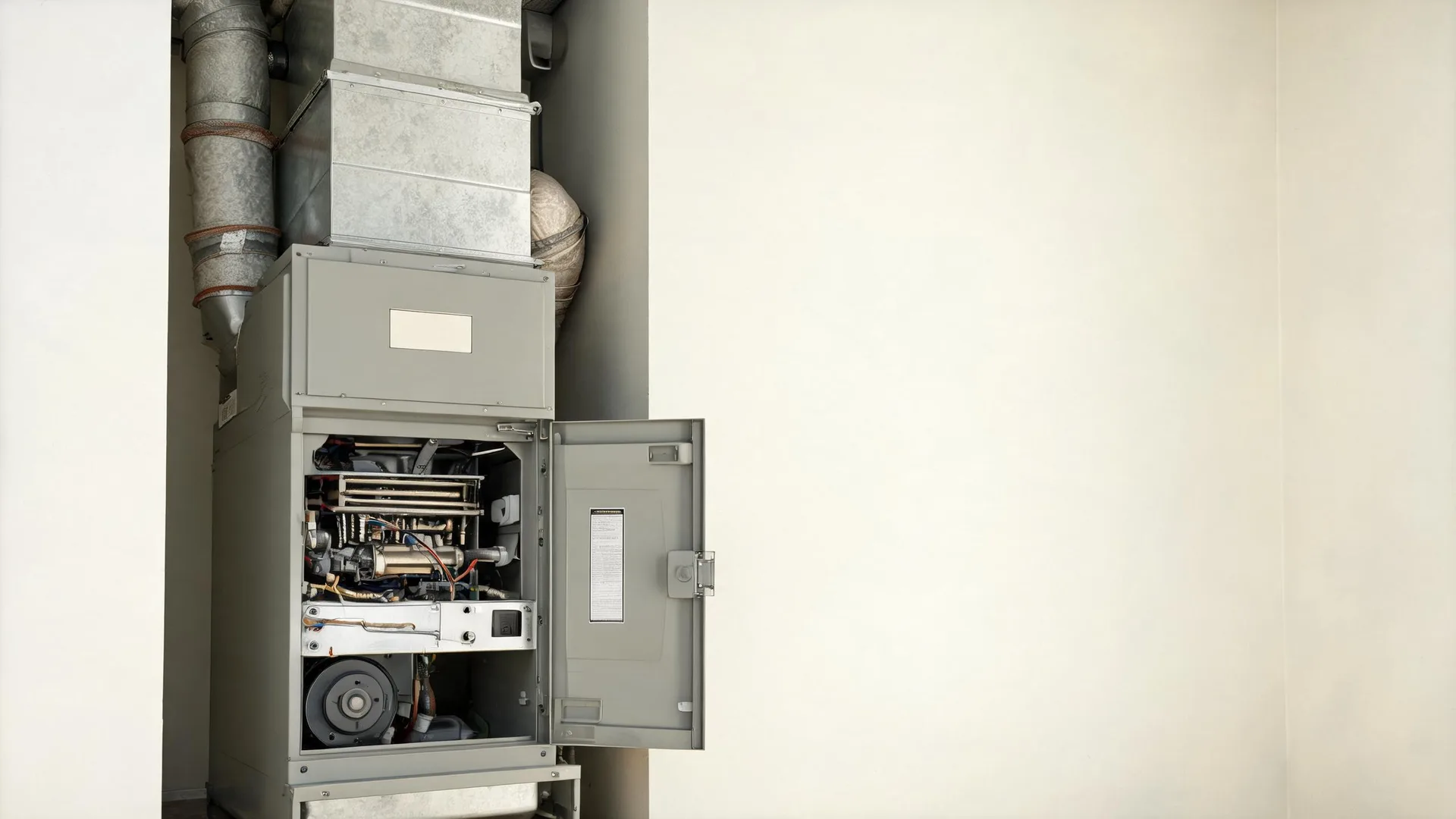
A higher AFUE changes the installation

A furnace rated higher on the AFUE scale cools the exhaust more before it leaves the house, and exhaust that cool can't vent up a standard metal flue. It needs its own venting, usually run through a wall with plastic pipe instead of tied into the old chimney. Comparing furnaces on AFUE alone without asking what venting each one needs is how a venting cost shows up as a surprise after the quote.

An unfinished basement featuring exposed ceiling joists, a metal HVAC unit with round ductwork, a hanging light bulb, and scattered boxes and debris along the left wall.

A high-efficiency gas furnace would save about $170 a year to run in Boone County compared with a gas furnace.

  • A high-efficiency gas furnace$790 a year
  • A gas furnace$960 a year

Estimates for a typical Boone County home, from EIA household energy data, Missouri fuel prices and NOAA climate normals. Your home will differ.

The old furnace comes out first. The gas line gets capped off, the flue disconnects, and the ductwork plenum gets opened up to see what it's actually working with. That's often the point where plans shift a little, because what's behind the old unit doesn't always match what the quote assumed. The new furnace gets set, leveled, and connected to the gas line, the ductwork, and the vent, and each of those connections gets checked before anything else happens. Gas lines get tested for leaks. Once the furnace fires, the technician checks the flame, checks the temperature rise across the heat exchanger, and watches how the blower responds. The thermostat gets wired last, and the system runs through a full cycle before anyone calls it done.