




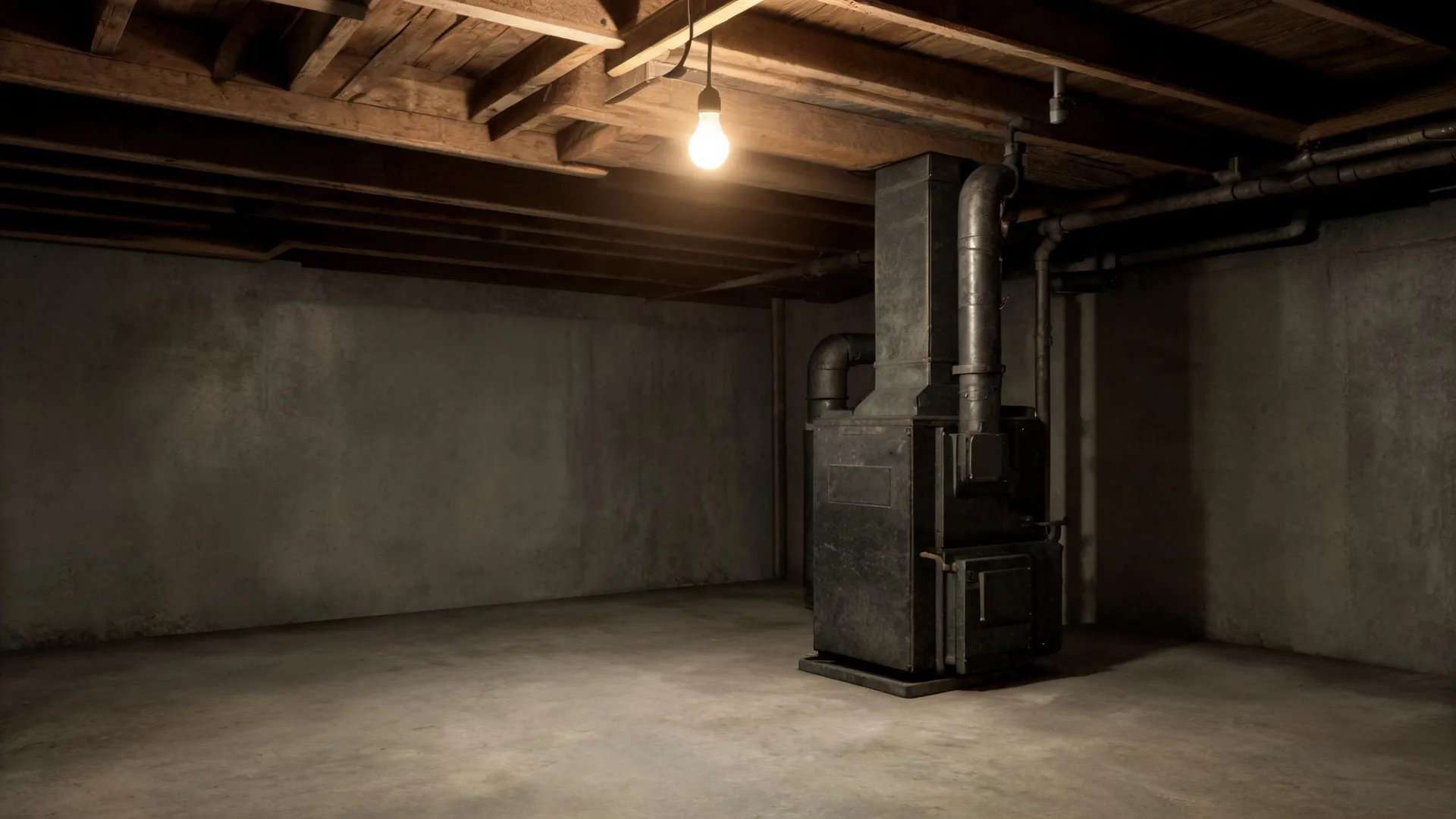
An unfinished basement interior showing a gray furnace unit beneath a bare incandescent bulb, surrounded by exposed joists, concrete walls, cardboard boxes, and utility pipes.

Furnace Installation in Bolivar, MO

Tell us about the job

Takes about a minute. No obligation.

New system or replacementFurnace or heatingPolk County, MO
Step 1 of 2

What ZIP code is the job in?

Polk County saw 190 severe weather events between 2015 and 2024. Damaging wind caused 99 of those, hail another 72, and 12 tornadoes touched down in that stretch. Any one of those can take the power out, and when the state surveyed Missouri households in 2024, nearly one in five had gone at least a full day without electricity. A furnace needs power to run even if the fuel behind it is gas, since the blower, the control board and the igniter all draw electricity. If the power is out, the furnace is out, no matter how new it is. Where the installer sets the outdoor equipment and what backup options you plan for are worth deciding before the system goes in, not after a storm already proved the point.

7 months
October through April, your furnace is on duty
25°F
the average winter night it heats against
80% AFUE
the federal minimum any new unit must meet
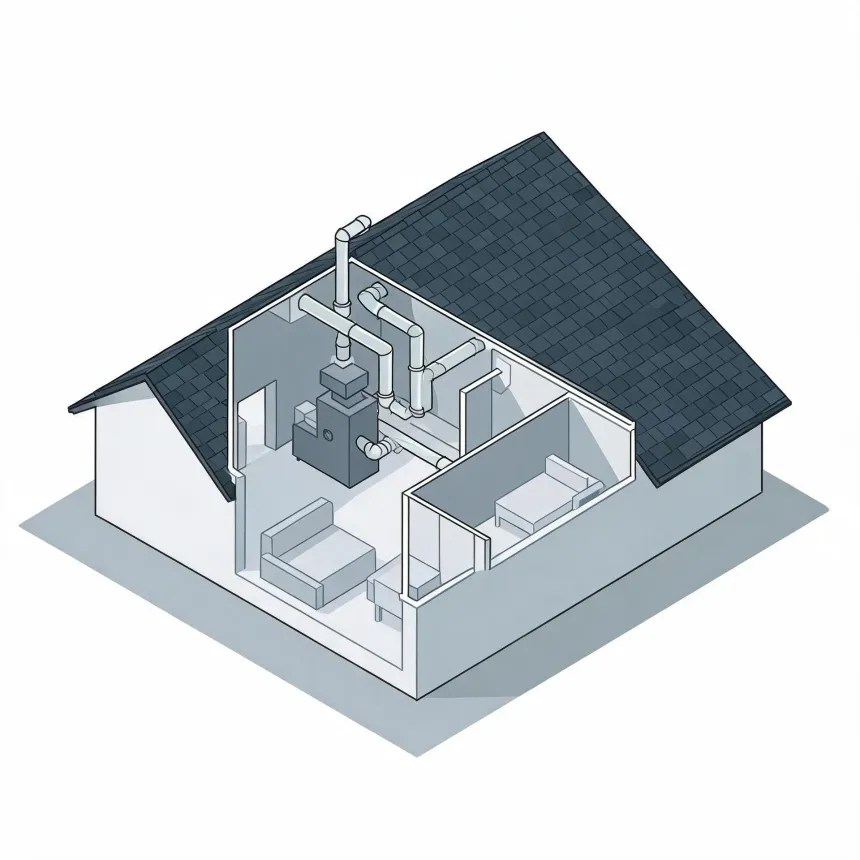
Isometric cutaway illustration of a single-story house with a dark shingled roof, showing interior rooms with furniture and a furnace connected to ductwork.
Your furnace works hardest from November through March.

NOAA nClimDiv, 1991–2020 normals

Furnaces in Bolivar start running in October and work through April.

Get the new one in by September, before the first cold night forces the decision.

Electric heat here runs on a grid that doesn't always hold up

Climate zone 4A
Heat runs October through April
Winter nights average 25°F
Electric Heat Needs the Grid to Stay Up68% of homes in Polk County heat with electricity, more than any other fuel.

Polk County falls in climate zone 4A, which asks a furnace to work in both muggy summers and cold winters. That rating sets a floor on what can be installed here. A furnace built on or after November 19, 2015 has to turn at least 80 percent of the gas it burns into heat over the winter. That's the minimum, not a target, so any new system will meet it or beat it. The number moves higher soon: furnaces built on or after December 18, 2028 have to hit 95 percent. If your install falls near that date, ask which standard the unit you're looking at was built to meet.

Decide where the unit goes and how you'll keep heat before the storm, not after

The install is the time to settle this, not the night the power drops. Ask the installer where the outdoor equipment will sit and what it takes to shield it. Ask what keeps the furnace running, or gets it back fast, when the grid doesn't hold.

Find a contractor
A gray residential gas furnace installed in an unfinished basement, connected to sheet-metal ductwork and PVC pipes.

The Old Furnace Comes Out Completely

The old furnace doesn't get reused once it's out. A technician disconnects the gas line, caps it, and pulls the vent connector or flue pipe that carried exhaust out of the house. The cabinet gets unbolted from the plenum and cut down if it won't fit through the doorway whole. Whatever refrigerant lines or electrical connections tie into it get disconnected at the same time, since a lot of systems share a disconnect or low-voltage wiring with the cooling side. None of that is salvageable in a way that matters. The heat exchanger and burners inside have been running a flame for years, and metal that's been through that many heat cycles isn't something you reinstall anywhere else. The new unit doesn't inherit any of the old one's wear. It starts its own clock the day it's set, on its own vent, its own gas connection, its own control board.

The Furnace Itself Is One Piece of the Bill

The unit is sized to the house by a load calculation, not by the size of the one coming out. A furnace too big cycles on and off fast and wears out its own parts early. One too small runs long and still leaves rooms cold. Beyond the furnace, the price covers the vent pipe or flue, the gas line and its connections, the ductwork it ties into, and the control wiring that links it to the thermostat. If any of those need work to match the new unit, that work is part of the job, not separate from it.
What's Already There Changes the Job

A furnace going into the same spot as the old one, using the same vent and gas line, is a more straightforward swap. One that's moving, switching fuel type, or feeding ducts that were sized for a different unit means more work before the new furnace ever gets set. An installer has to open the walls or ducts up enough to see what's actually there before quoting the job honestly. Closets or utility rooms with tight clearances can also call for a smaller cabinet or a different vent path, and that's worth knowing before the day of install.

The right size comes from a load calculation, a room by room count of how much heat the house loses on the coldest days, not a guess based on square footage or whatever furnace is already in the closet. Windows, insulation, ceiling height and duct layout all factor in, since two houses the same size can need different furnaces depending on how they hold heat. A furnace sized too big fires up, blasts the house to temperature fast, then shuts off, over and over through the night. Each start puts wear on the igniter and the heat exchanger, and the short cycles never give the ductwork time to move air evenly, so some rooms run warm and others stay cold. A furnace sized too small just runs long, straining to keep up on the coldest days and still losing the argument. Getting the number right before install is what makes the rest of the system, the ductwork, the vent, the gas line, work the way it's supposed to.

Install day starts with the old unit coming out and ends with the new one running a full cycle before the crew leaves. A technician checks the gas pressure at the manifold, not just at the meter, because the furnace has to get the right pressure to fire clean. Static pressure in the ductwork gets tested too. Too much resistance and the blower works harder than it should for the life of the unit. The vent pipe gets pitched and sized to carry exhaust out correctly, since a furnace vented wrong can pull combustion gas back into the house instead of outside. Once it's set, the furnace gets fired up and run through a full heating cycle while the technician checks the flame, the temperature rise across the heat exchanger, and the amp draw on the blower motor against what the unit is rated for. A furnace that's never been test fired is still an unknown no matter how carefully it was installed.